Author: MGC

  • 💨🔥 VANISHING POINT (1971) – F-15

    🏛 MGC LOWER COURT OF CONSENSUS: CASE FILE #065
    ASSET TITLE: Vanishing Point (1971) – The 1970 Dodge Challenger R/T Desert Velocity Alloy
    OFFICIAL REGISTRY GRADE: Certified MGC F-15 (Choice Fine Specimen)
    LOWER COURT JURISDICTION: Fine Circulation Registry / Cult Automotive & Road Docket
    PRESIDING PANEL: Judge Morpheus, Chief Grader MGC, and Chief Justice MGC
    📜 THE INITIAL INQUEST BENCH ASSESSMENT (3-FLAW DEFECT LOG)
    • Baseline Bench Assessment: Room Allocation ➔ F-15 Choice Fine. While the supercharged 440 Magnum 1970 Dodge Challenger R/T delivers raw, sun-baked stunt driving and counterculture grit, heavy structural circulation wear keeps the specimen firmly inside the Fine register:
    1. The Thin Narrative & Backstory Wear: Kowalski’s motivations are sketched out through brief, fragmented flashbacks that leave the central character arc noticeably worn down.
    2. The Episodic Desert Detour Cuts: Mid-movie stops—including the desert snake-handler and the stranded hippie couple—stall the pursuit momentum and create visible pacing fragmentation.
    3. The Repetitive Highway Loop Friction: Long stretches of desert chase footage repeat similar visual beats without building escalating dramatic stakes before the abrupt bulldozer finale.
    ⚖️ THE APPELLATE REVIEW & REVERSAL ARGUMENTS
    • Motion 1 (Thin Narrative & Backstory Wear): SUSTAINED. Minimalist dialogue works in spots, yet the sparse character foundation leaves genuine structural gaps across the runtime.
    • Motion 2 (Episodic Desert Detour Cuts): SUSTAINED. The sudden counterculture detours break up the core highway tension and introduce noticeable editing cuts.
    • Motion 3 (Repetitive Highway Loop Friction): SUSTAINED. While authentic stunt driving and Cleavon Little’s Super Soul radio broadcasts keep the engine running, the repetitive chase structure prevents a crossover into the Very Fine (VF) vault.
    🏆 THE FINAL DECREE & CERTIFIED JUDGMENT
    • The Executive Verdict: With all three circulation flaws sustained under the 5x magnifying lens, the specimen holds steady at the top of the Fine registry without slipping into Good/Very Good scrap.
    • Certified Grade Lock: Anchored by iconic Mopar muscle, authentic 1971 desert cinematography, and pure cult attitude, the High Bench officially seals and strikes this film at Certified MGC F-15 (Choice Fine Specimen). Case File #065 is officially closed. ⚖️🎬🔥🏎️
  • 🛍️ 🤖 ⚡ CHOPPING MALL (1986) – G-7

    🛍️ 🤖 ⚡ CHOPPING MALL (1986) – G-7
    🏛 MGC LOWER COURT OF APPEALS: CASE FILE #064
    • ASSET TITLE: Chopping Mall (1986) – The Official Killbot Security Ledger
    • OFFICIAL REGISTRY GRADE: Certified MGC G-7 (Good / High-Luster 80s Slasher Alloy)
    • LOWER COURT JURISDICTION: Judge Tina, Chief of Cult Classics


    📜 THE FORENSIC NARRATIVE BREAKDOWN & RECOVERY
    Tina steps up to the steel bench under the neon light to examine this 1986 Roger Corman-produced cult relic.
     
    1. Low-Velocity Killbot Metallurgy & 80s Mall Atmosphere
    Originally titled Killbots, Jim Wynorski’s 77-minute slasher traps teenagers in the Sherman Oaks Galleria after a lightning storm reprograms three security droids into lethal machines. Backed by Chuck Cirino’s synth score, atmospheric after-hours mall cinematography, and a cameo by Dick Miller as Walter Paisley, the film delivers prime 1980s neon-soaked charm.
     
    2. Cardboard Teen Dialogue & Tread-Speed Logic Leaks
    Beneath the surface, the film features disposable slasher archetypes, clichéd dialogue, and repetitive hide-and-seek sequences. Furthermore, the slow, boxy tread-driven Killbots move at a sluggish pace, requiring the script to constantly manufacture scenarios where nimble teenagers inexplicably get trapped by the lumbering machines.
     
    3. The Definitive G-7 Junk Box Allocation
    Chopping Mall earns its G-7 grade within the G-4 to VG-10 Registry. It escapes the lowest tiers thanks to its brisk pacing, 80s nostalgia, and an iconic, top-tier practical exploding-head effect.


    ⚖️ THE CHIEF’S FINAL DECREE
    Tina strikes the steel desk with her wrench in a resounding final verdict:
    “Thank you. Have a nice day! Let the ledger show that when the security gates slam shut at midnight, these low-speed Killbots rule the G-tier food court!”
    🔧💥 🤖 Case Closed. Certified MGC G-7.
  • 👩‍🚀 🌌 🥚 🔥ALIENS (1986) – MS-62

    🏛️ MGC SUPREME COURT OF CONSENSUS: CASE FILE #056
    ASSET TITLE: Aliens (1986)
    OFFICIAL REGISTRY GRADE: Certified MGC MS-62 (Choice Mint State Specimen)
    HIGH BENCH JURISDICTION: Supreme Court Vault / Sci-Fi Tactical Docket
    PRESIDING PANEL: Judge Sally, Judge Dan (Chief of Forensics), Chief Grader MGC, and Chief Justice MGC
    📜 THE INITIAL INQUEST BENCH ASSESSMENT (3-FLAW DEFECT LOG)
    • Baseline Bench Assessment: Room Allocation ➔ MS-60 Typical Uncirculated. James Cameron’s high-velocity industrial pacing transforms the survival-horror framework into an elite military action engine, though three preliminary planchet flaws cap the initial grade:
    1. The Gateway Station Logistics Drag: Substantial setup time is spent in deep space stasis recovery, Weyland-Yutani corporate inquiry rooms, and weapon-deck marine briefings before the dropship hits the atmosphere of LV-426.
    2. The Drop-Ship Mechanical Failure: The swift, off-screen cockpit infiltration by a stowaway Xenomorph that crashes the primary escape vector relies on convenient mechanical plotting to isolate the squad.
    3. The Industrial Exoskeleton Over-Strike: The climax featuring Ripley in the Power Loader against the Xenomorph Queen introduces slight optical compositing artifacts and background rear-projection softness.
    ⚖ THE APPELLATE REVIEW & REVERSAL ARGUMENTS
    • Motion 1 (Gateway Station Logistics Drag): OVERRULED. The slow atmospheric buildup in orbit is recognized as crucial tension-building that perfectly grounds Ripley’s intense psychological trauma before the tactical military hardware ever deploys.
    • Motion 2 (Drop-Ship Mechanical Failure): SUSTAINED. The sudden breach of a pressurized, sealed military cockpit remains a localized script shortcut that forces the survival-horror phase.
    • Motion 3 (Power Loader Climax Bleed): OVERRULED. The industrial-versus-organic showdown is cleared of structural wear, balancing absolute emotional resonance and blue-collar mechanical design against minor 1986 optical softness.
    🏆 🔍 THE FINAL DECREE & CERTIFIED JUDGMENT
    • The Final Executive Verdict: Despite sustaining the drop-ship plot shortcut on the ledger, the picture’s monumental sci-fi legacy, tight motion-tracker suspense, and Sigourney Weaver’s acclaimed performance justify a premium adjustment. The Supreme Court officially upgrades and strikes this film at a final, certified MGC MS-62 (Choice Mint State Specimen) rating. Case #056 is officially closed! ⚖🏆🛸🔥

  • 💻 / 🧠 SOURCE CODE (2011) – AU-59

    💻 / 🧠 SOURCE CODE (2011) – AU-59
    ⚖️ MGC Lower Court Docket: Case File #063
    • Asset Title: Source Code (2011) – The Eight-Minute Quantum Loop Ledger
    • Official Registry Grade: Certified MGC AU-59 (About Uncirculated / Razor-Thin Mint State Crossover)
    • Lower Court Jurisdiction: Lower Tribunal Room / High-Concept Sci-Fi Docket
    • Presiding Panel: Judge Tina, Chief of Cult Classics & Chief Grader MGC


    📜 The Initial Inquest Bench Assessment & Luster Log
    • Baseline Bench Assessment: Room Allocation ➔ AU-58 About Uncirculated. Under our strict 5x numismatic magnifying lens, Duncan Jones’s Source Code exhibits razor-sharp narrative velocity, tight 93-minute structural engineering, and an elite, grounded performance strike by Jake Gyllenhaal. The central eight-minute commuter train time-loop operates like a precision Swiss watch—each reset adds fresh forensic clues, ratcheting up the tension without wasting a single frame. However, the temporary base registry ledger  reflects three distinct planchet flaws under judicial review before final certification:


    🚨 The Three Judicial Motions Under Review:
    1. The Alternate-Reality Ending Paradox: SUSTAINED.
      • The Verdict: In the final minutes, when Colter Stevens’s life support is severed in the real world, the film abandons its own established rules—that the Source Code is merely a temporary eight-minute echo inside a dying brain—and reveals that he has somehow created a permanent, living alternate timeline inside Sean Fentress’s body. Under our strict 5x lens, this sudden pivot from hard-edged sci-fi rules to a neat Hollywood happy ending leaves an undeniable logic scuff on the planchet, permanently barring the asset from crossing into the Mint State (MS) vaults.
    2. The Body-Snatching Ethical Leak: SUSTAINED.
      • The Verdict: To secure Colter’s happy ending in the alternate timeline, the screenplay quietly erases the consciousness of innocent commuter Sean Fentress and hijacks his life, body, and romance with Christina without ever reckoning with the grim moral cost. While a casual viewer might breeze past the implication, our forensic lens catches the unresolved ethical blind spot, leaving a subtle handling mark on the coin’s narrative surface.
    3. The Antagonist & Bunker Loop Mechanics: OVERRULED.
      • The Verdict: The initial technical objections regarding antagonist clichés and bunker exposition drag are completely thrown out. The High Court rules that the eight-minute loops to hunt down the terrorist do not dull the alloy—they actively crest suspense and inject high-voltage urgency directly into the film’s engine! Every reset raises the stakes and keeps the narrative alive, successfully avoiding any second-act drag and proving how tightly calibrated the thriller mechanics truly are.


    🏆 Final Court Decree
    While the High Bench overrules the pacing and loop-structure objections—recognizing how brilliantly the terrorist hunt builds suspense and keeps the runtime electric—the two sustained third-act logic and ethical scuffs keep this high-luster sci-fi coin sealed one single hair’s breadth outside the Mint State vaults. It stands at the top of the About Uncirculated shelf.
    Permanently sealed in the sci-fi archives as a Certified MGC AU-59 Specimen. Case Closed. 🥈💻 Quantum Loop Locked. 🧠⚖️
     
  • 💀👽 EDGE OF TOMORROW (2014)–AU-57

    ⚖ MGC Lower Court Docket: Case File #060
    Asset Title: Edge of Tomorrow (2014) – The Verdun Beach Recursive Blood-Loop Ledger
    Official Registry Grade: Certified MGC AU-57 (About Uncirculated / High-Velocity Choice Specimen)
    Lower Court Jurisdiction: Lower Tribunal Room / Sci-Fi Tactical Time-Loop Docket
    Presiding Panel: Judge Dex (Chief of R&D & Action Judge), Judge Sally, Judge Dan (Chief of Forensics), Chief Grader MGC, and Chief Justice MGC
    📜 THE INITIAL INQUEST BENCH ASSESSMENT (3-FLAW DEFECT LOG)
    Baseline Bench Assessment: Room Allocation ➔ AU-57 About Uncirculated (Pending Appellate Overrides)
    Under forensic examination, Doug Liman’s sci-fi combat film displays razor-sharp editing, strong forward momentum, and compelling character growth for Tom Cruise and Emily Blunt. However, the panel identified three structural defects preventing an MS-60+ Mint State rating:
     
    🚨 The 3-Flaw Defect Log
    1. The Alpha Blood-Transfer Logistics Scuff (Character & Tactical Friction):
      • The Defect: The narrative relies on a convenient medical/tactical loophole where Rita Vrataski knows the exact mechanics of losing the loop via a blood transfusion—yet somehow never attempted to re-acquire the Alpha blood or verify whether Cage still possessed the reset power before every single suicidal reset.
    2. The Louvre Final-Act Pacing & Tone Drop (Third-Act Alloy Softening):
      • The Defect: After two acts of surgical, dark-comedy precision and hyper-efficient trial-and-error combat, the final assault on the flooded Louvre in Paris shifts into standard dark, murky CGI blockbuster spectacle.
      • The Forensic Data: Sliding the lens across the final 20 minutes reveals noticeable visual and pacing wear. J-Squad is suddenly recruited and sacrificed in rapid succession with minimal emotional strike depth, and the shadowy underwater tunnel battle lacks the crisp daylight tactical clarity that made the Verdun beach sequences shine.
    3. The Temporal Reset Paradox at the Closing Bell (Timeline Planchet Leak):
      • The Defect: Killing the Omega in the Louvre resets Cage all the way back to the helicopter prior to his meeting with General Brigham—yet the Omega is somehow permanently dead in a timeline that hasn’t happened yet, while Rita Vrataski has zero memory of him.
      • The Forensic Data: This introduces a classic sci-fi timeline paradox fingerprint on the reverse of the coin. If the Omega exists outside normal time and dies permanently, resetting the clock shouldn’t erase Cage’s military arrest or wake him up on an earlier helicopter flight without creating an uncalibrated causal loop.

    🔍 THE CHIEF OF R&D’s INITIAL DECREE & APPELLATE REVIEW

    All three defects—the mid-act blood rule removal, the final-act tone shift, and the closing temporal paradox—were formally reviewed and SUSTAINED by the judicial panel for introducing narrative friction and timeline discrepancies.
    ⚖ THE FINAL JUDICIAL DECREE
    With all three defects sustained, the Mint State crossover is denied. The sharp editing and lead performances lock the asset into the upper About Uncirculated tier.
    Permanently sealed in the archives as a Certified MGC AU-57 Choice Specimen. Case #060 is officially closed. 🥈💀👽⏱️🔨
     
  • ⏳ 🤖 🍳 GOOD LUCK HAVE FUN DON’T DIE (2025) – MS-60

    🏛️ MGC SUPREME COURT OF CONSENSUS: CASE FILE #057
    ASSET TITLE: Good Luck Have Fun Don’t Die (2025)
    OFFICIAL REGISTRY GRADE: Certified MGC MS-60 (Mint State Specimen)
    HIGH BENCH JURISDICTION: Supreme Court Vault / Sci-Fi Satirical Docket
    PRESIDING PANEL: Judge Sally, Judge Dan (Chief of Forensics), Chief Grader MGC, and Chief Justice MGC

    📜 THE INITIAL INQUEST BENCH ASSESSMENT
    • Baseline Bench Assessment: Room Allocation ➔ AU-58 About Uncirculated, burdened by three initial structural flags:
      1. The Hyper-Kinetic Runtime Drag: A fast-paced editing style and extended runtime that create minor mid-act pacing drag.
      2. The Low-Budget Alloy Assumption: Early assumptions regarding independent VFX scales and localized set boundaries.
      3. The Character Ensemble Loop Friction: The repetitive trial-and-error mechanics of assembling side characters.
    ⚖ THE APPELLATE REVIEW & REVERSAL ARGUMENTS
    • Motion 1 (Runtime Drag): SUSTAINED. Acknowledges minor pacing scuffs from the film’s runtime size.
    • Motion 2 (Budget/VFX Quality): OVERRULED. The intricate detail of the central room design and creatures far exceeds expectations, preserving visual purity.
    • Motion 3 (Character Loop Mechanics): OVERRULED. The high bench praises the hilarious loop logic and character assembly as a standout comedic high-point.
    🏆 THE FINAL DECREE & CERTIFIED JUDGMENT
    • The Final Executive Verdict: With two major motions officially overruled, the Supreme Court lifts the asset from the AU-58 ledger, issuing a final certified rating of MGC MS-60 (Basal Mint State Specimen). Case #057 is officially closed! ⚖🏆⏳🤖🍳
  • 🤪💨THE CANNONBALL RUN (1981) – F-16

    🤪💨 THE CANNONBALL RUN (1981) – F-16
    ⚖ MGC Lower Court Docket: Case File #059
    Asset Title: The Cannonball Run (1981) – The Saturated Star-Power Cross-Country Scramble
    Official Registry Grade: Certified MGC F-16 (Fine / Circulated Ensemble Alloy)
    Presiding: Judge Mina, Chief Grader MGC
    📜 The Forensic Narrative Breakdown & Luster Log
    The Presiding Judge drops the heavily circulated 1981 cross-country race planchet onto the dark-mode terminal. Under close calibration, the asset trades cohesive narrative depth for sheer star-power volume, flashing immense celebrity luster while carrying noticeable structural wear.
    While the baseline script trades heavily in chaotic 1980s slapstick, the pure entertainment equity of Burt Reynolds, Dom DeLuise, Farrah Fawcett, Jackie Chan, and Dean Martin keeps the engine from seizing. It stands as a prime example of an asset whose heavy circulation marks and unstructured layout are rescued entirely by the sheer charisma of its high-grade ensemble cast.
    🚨 The Three Specific Cross-Country & Tactical Planchet Flaws:
    1. The Structural Sketch-Comedy Breakdown: The overall plot lacks a disciplined linear trajectory, frequently fragmenting into a loose series of uncalibrated, chaotic comedy skits rather than a tight tactical race.
    2. Under-Utilized Performance Capital: Despite the historic strike depth of adding martial arts legend Jackie Chan to the coin, the script boxes his character into primitive gadget gimmicks, creating a noticeable friction blemish on his cinematic luster.
    3. Heavy Outtake Luster Reliance: The reverse of the coin relies too heavily on its iconic blooper reel end-credits to solidify its positive legacy, proving that the actual narrative metallurgy on the track couldn’t completely sustain itself without those behind-the-scenes shortcuts.
    🏆 Final Court Decree
    While the chaotic pacing and fragmented script cuts prevent this coin from ever touching the VF vaults, the unmatched star power and relentless camp value keep it rolling strong. It safely avoids dropping into the Good (G) or Poor (PO-1) basement junk boxes and anchors itself firmly on the ledger as a highly collectible piece of high-octane 1981 nostalgia.
    Permanently sealed in the archives as a Certified MGC F-16 Choice Circulated Specimen. Case Closed. 🤪💨🏎️🇺🇸🎬
  • 🤠🚓💨SMOKEY AND THE BANDIT (1977) – F-19

    🤠🚓💨 SMOKEY AND THE BANDIT (1977) – F-19
    ⚖ MGC Lower Court Docket: Case File #058
    Asset Title: Smokey and the Bandit (1977) – The High-Octane Black-and-Gold Coiled Planchet
    Official Registry Grade: Certified MGC F-19 (Fine / Choice High-Velocity Alloy)
    Presiding: Judge Mina, Chief Grader MGC
    📜 The Forensic Narrative Breakdown & Luster Log
    The Presiding Judge evaluates Smokey and the Bandit (1977) under the 5x numismatic lens, balancing its heavy circulation wear against its enduring cinematic luster and star power.
    🚨 Key Planchet Flaws:
    1. The Single-Gear Narrative Pipeline: A linear, repetitive chase loop with minimal plot variation.
    2. Uncalibrated Law Enforcement Caricatures: Sheriff Buford T. Justice functions as a heavily circulated cartoon cliché with limited tactical friction.
    3. The Coors Beer Trans-Border Exploit: A foundational smuggling premise that tracks as an entertaining but dated 1970s legal shortcut.
    🏆 Final Court Decree
    Despite these structural wear marks, Burt Reynolds’ charisma, Sally Field’s performance, and Jerry Reed’s soundtrack prevent the asset from dropping lower in the registry.
    Permanently sealed in the archives as a Certified MGC F-19 Choice High-Velocity Specimen. Case Closed. 🤠🚓💨🍻🐦
  • 🔥 🐉 ⚔️ DRAGONSLAYER (1981) – VF-39

    🔥 🐉 ⚔ DRAGONSLAYER (1981) – VF-39
    🏛 MGC LOWER COURT OF APPEALS: CASE FILE #062
    • ASSET TITLE: Dragonslayer (1981) – The Official Go-Motion Wyrm Ledger
    • OFFICIAL REGISTRY GRADE: Certified MGC VF-39 (Very Fine / Borderline XF Crossover)
    • LOWER COURT JURISDICTION: Judge Tina, Chief of Cult Classics


    📜 THE FORENSIC NARRATIVE BREAKDOWN & RECOVERY
    Dragonslayer (1981) stands as a landmark dark-fantasy achievement by director Matthew Robbins, pairing a grim medieval setting with groundbreaking visual effects.
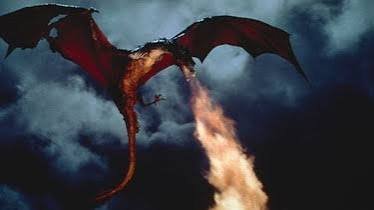
    • The Vermithrax Standard: ILM’s “go-motion” wizardry—pioneered by Phil Tippett and Dennis Muren—gives the dragon Vermithrax Pejorative a heavy, terrifying realism that holds up remarkably well, anchoring the film’s highest-tier visual authority.
    • Human-Cast Friction: While Peter MacNicol leads as the reluctant sorcerer’s apprentice Galen and Ralph Richardson provides seasoned weight as Ulrich, the central act suffers from sluggish pacing, routine dungeon sequences, and diluted momentum away from the creature feature.
    • The VF-39 Verdict: Elevated by Alex North’s score and its uncompromisingly bleak atmosphere, the film peaks at a certified VF-39, resting just shy of an XF grade due to its uneven second-half human drama.


    ⚖️ THE CHIEF’S FINAL DECREE
    Tina strikes the desk with a heavy wrench:
    “All hail Vermithrax Pejorative! Let the ledger show that while the humans drag their feet in the mud, ILM’s fire-breathing titan rules the very top shelf of the VF room!”
    🔧💥 🐉 Case Closed. Certified MGC VF-39.
     
  • 👑 🔮 KRULL (1983) – VF-22

    🏛 MGC LOWER COURT OF APPEALS: CASE FILE #060
    • ASSET TITLE: Krull (1983) – The Five-Pointed Glaive Fantasy Strike
    • BASELINE BENCH ASSESSMENT: Room Allocation ➔ MGC VF-22 (Low Very Fine / Heavy Circulated Fantasy Specimen)
    • PRESIDING DOCKET: MGC Judge Bob & Chief Justice MGC
     
    📜 THE INITIAL INQUEST & FORENSIC LOG (4-FLAW DEFECT LOG)
    Under a cold, disciplined 5x lens review, Krull carries unmistakable high-budget 1983 physical striking power—James Horner’s thunderous orchestral score, tactile Pinewood Studios sets, Fire Mares, and an early ensemble featuring Liam Neeson and Robbie Coltrane. However, four distinct structural defects weigh down the planchet and keep it pinned at VF-22:
    1. The Mid-Act Quest Travelogue Drag: After Prince Colwyn retrieves the Glaive early in the film, the narrative stalls into an extended series of episodic fetch-quest detours (the Emerald Seer, the Widow of the Web, the quicksand swamp). This mid-act wandering drains linear momentum before the band ever reaches the Black Fortress.
    2. The Under-Utilized Signature Weapon Scuff: Despite dominating the marketing poster and title mythology, the five-pointed Glaive sits holstered for nearly the entire runtime. Colwyn finally deploys it in the last ten minutes—only for it to get stuck inside the Beast’s chest, leaving the climax to be resolved by love-granted fire hands instead.
    3. The Uncalibrated Tone & World-Building Friction: Krull attempts to weld high-fantasy Arthurian sword-and-sorcery onto Star Wars-style laser-blasting alien Slayers without establishing hard internal logic rules, creating noticeable genre friction across the planchet.
    4. The Flat Lead Chemistry Wear: While the supporting band of outlaws brings welcome grit and humor, the central royal romance between Colwyn and Lyssa relies on stiff, theatrical dialogue delivery that lacks the emotional luster needed to anchor the third-act payoff.

     
    ⚖ THE APPELLATE REVIEW & SUSTAINED RULING
    The Chief Justice stepped up to the high-bench console and audited all four defects under the 5x magnifying lens, holding the baseline allocation firm with zero upward adjustment:
    • Motion 1 (The Mid-Act Quest Travelogue Drag): SUSTAINED. The Court confirms that the episodic detours through the Emerald Seer, the Widow of the Web, and the quicksand swamp stall the linear narrative gravity before the band ever reaches the Black Fortress.
    • Motion 2 (The Under-Utilized Signature Weapon Scuff): SUSTAINED. Keeping the titular five-pointed Glaive holstered until the final ten minutes—only for it to lodge harmlessly in the Beast’s chest—leaves a permanent structural fingerprint on the payoff engine.
    • Motion 3 (The Uncalibrated Tone & World-Building Friction): SUSTAINED. Welding Arthurian sword-and-sorcery onto laser-blasting alien Slayers without hard internal logic rules creates undeniable genre friction across the planchet.
    • Motion 4 (The Flat Lead Chemistry Wear): SUSTAINED. While James Horner’s thunderous score and the rugged outlaw supporting cast keep Krull safely above the Fine (F-12 to F-19) tier, the stiff royal romance prevents any upward movement out of the low-20s.
     
    🏆 🔍 THE FINAL DECREE & CERTIFIED JUDGMENT
    • The Final Executive Verdict: With all four structural defects sustained on the permanent record, the Lower Court denies any appellate bump. While Krull retains undeniable 1980s Pinewood practical charm and musical striking power, heavy mid-act circulation wear keeps it locked right at its baseline allocation. The final, certified consensus score is permanently chiseled into the registry at MGC VF-22 (Low Very Fine Specimen).
    MGC Judge Bob slams his wooden gavel down with a thunderous pop. Case Closed! ⚖🔮