Author: MGC

  • 🦈 🏝️ JAWS THE REVENGE (1987) – G-4

    🏛 MGC LOWER COURT OF APPEALS: CASE FILE #116
    • ASSET TITLE: Jaws: The Revenge (1987) – The Bahamas Telepathic Great White Ledger
    • OFFICIAL REGISTRY GRADE: Certified MGC G-4 (Good / Heavily Circulated Sequel Relic)
    • LOWER COURT JURISDICTION: Judge Morpheus (Lower Court Floor)
    📜 THE FORENSIC NARRATIVE BREAKDOWN & RECOVERY
    Examined under the strict 5x numismatic magnifying lens, Jaws: The Revenge (1987) exhibits severe structural corrosion across almost every narrative and technical seam, surviving just one tier above PO-1scrap metal on sheer late-night camp watchability.
    1. The Telepathic Revenge & Roaring Shark Corrosion (Script & Physics Defect)
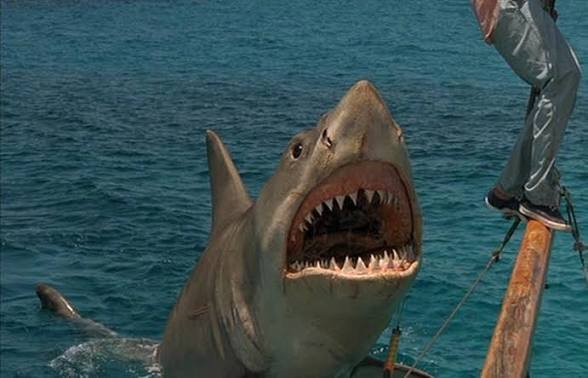
    • The Defect: The plot abandons basic marine biology in favor of a vengeful great white shark that stalks Ellen Brody (Lorraine Gary) 1,500 miles from Amity Island to the Bahamas—and literally roars like a lion above water.
    • The Forensic Data: Giving a shark psychic flashbacks to events it never witnessed and vocal cords during the climactic boat-impaling sequence shatters all dramatic tension and reduces the apex predator of Spielberg’s 1975 original into unintentional rubber-fin comedy.
    1. Severe Continuity & Editing Fragmentation (Technical Execution Scuff)
    • The Defect: Rushed production schedules leave glaring continuity errors and visible mechanical-shark seams scattered throughout the third act.
    • The Forensic Data: From shark-attack victims surviving off-screen after being visibly dragged beneath the waves to Michael Caine’s Hoagie wading ashore after a plane crash in a completely dry shirt, the editing reveals heavy circulation wear under close inspection.
    1. The G-4 Floor Survival Luster (Why It Escapes PO-1)
    • The Defect & Buffer: While narrative logic is nearly unreadable, the film retains basic 35mm theatrical cinematography, sunny Bahamas location photography, and committed veteran turns from Lorraine Gary and Michael Caine.
    • The Forensic Data: That baseline studio production polish and genuine B-movie entertainment value keep the specimen bolted onto the G-4 Good floor rather than being condemned to the PO-1 sub-basement.
    ⚖ FINAL JUDICIAL VERDICT
    With catastrophic script corrosion balanced only by glossy Bahamas location photography and high camp value, the asset permanently locks into the registry at a G-4 Good. Case Closed. 🦈🏝️🔨
  • 🦈 💦 JAWS 3D (1983)– G-5

    🏛 MGC LOWER COURT OF APPEALS: CASE FILE #117
    • ASSET TITLE: Jaws 3-D (1983) – The SeaWorld Underwater Glass-Tunnel Ledger
    • OFFICIAL REGISTRY GRADE: Certified MGC G-5 (Good / 3D Gimmick-Worn Sequel Specimen)
    • LOWER COURT JURISDICTION: Judge Morpheus (Lower Court Floor)
    🕶️ THE 5X SCAN & DEFECT LOG
    Morpheus sets the SeaWorld Orlando 35mm reel under the high-intensity 5x scanner, and lets the dual-projector 3D glare reveal every seam.
    1. The Frozen-Frame 3D Glass Smash (Visual Effects Corrosion)
    • The Defect: The film sacrifices physical realism to shove severed limbs, floating scuba gear, and a 35-foot shark straight toward the theater audience in 1983 stereoscopic 3D.
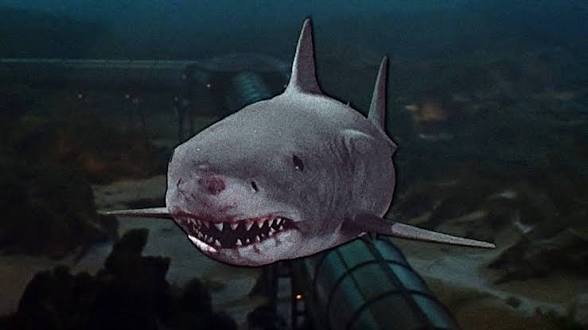
    • The Breakdown: Nothing exposes heavy circulation wear faster than the climactic control-room attack, where a visibly static, frozen-frame great white glides forward in slow motion like a cardboard cutout before shattering the glass.
    2. The “Mother Shark” Lagoon Physics Loop (Script & Logic Friction)
    • The Defect: Trapping a skyscraper-sized 35-foot mother shark inside a man-made Florida theme park lagoon forces the script into nonstop mechanical contrivances.
    • The Breakdown: From flooded underwater viewing tunnels that conveniently hold out just long enough for dialogue to a baby great white dying immediately in captivity to trigger a maternal rampage, the narrative logic runs on pure 1980s B-movie fumes.
    3. Why It Beats Jaws: The Revenge by One Point (G-5 vs. G-4)
    • The Breakdown: Unlike the 1987 Bahamas sequel, Jaws 3-D actually delivers a fun, claustrophobic disaster-movie hook—trapping park guests inside submerged acrylic tunnels while a giant shadow circles overhead—backed by an earnest cast (Dennis Quaid, Bess Armstrong, and Louis Gossett Jr.) that keeps the specimen one solid notch above the G-4 floor.
    ⚖️ MORPHEUS’S BENCH VERDICT
    Morpheus taps the 5x lens twice, and stamps the SeaWorld dossier.
    With cheesy 1983 3D gimmicks and frozen-frame shark effects balanced by genuinely fun underwater-tunnel claustrophobia, this specimen locks cleanly into the registry at G-5 Good. Case Closed. 🦈💦🕶️
  • 🦆 🎸 HOWARD THE DUCK (1986) – G-6

    🏛 MGC LOWER COURT OF APPEALS: CASE FILE #118
    • ASSET TITLE: Howard the Duck (1986) – The Cleveland Laser-Beam Duck-Planet Ledger
    • OFFICIAL REGISTRY GRADE: Certified MGC G-6 (Good / Big-Budget 1980s Cult Misfire)
    • LOWER COURT JURISDICTION: Judge Morpheus (Lower Court Floor)
    🕶️ MORPHEUS’S 5X LENS INSPECTION
    Morpheus leans back in his chair, pushes his rimless shades up, and sets the 1986 George Lucas-produced cult oddity under the 5x glass.
    1. The Tonal Identity Crisis (Script & Genre Whiplash)
    • The Defect: The movie never figures out whether it wants to be a cynical adult comic-book satire, a family-friendly sci-fi adventure, or an 80s rock-and-roll romance.
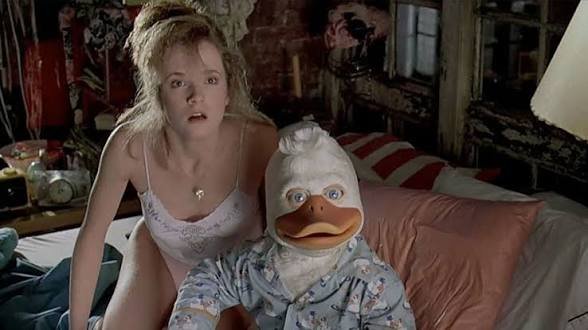
    • The Breakdown: One minute Howard is cracking sarcastic jokes about Playduck magazines and working dead-end jobs in Cleveland; the next, he’s dodging demonic Dark Overlords and sharing awkward bedroom scenes with Lea Thompson.
    2. The Rubber-Suit Limitations (Lead Character Execution)
    • The Defect: Putting a mid-1980s actor inside a rigid animatronic duck suit severely limits facial expressions, mouth sync, and physical comedy.
    • The Breakdown: Even with multiple puppeteers operating the bill and eyebrows off-camera, Howard often looks stiff during dialogue-heavy scenes, making his romantic chemistry with Beverly feel bizarre rather than charming.
    3. Real 1980s Studio Craftsmanship & Cult Charm (Why It Earns G-6)
    • The Breakdown: Beneath the messy script, Howard the Duck still packs genuine big-budget 1980s production muscle—featuring classic ILM stop-motion monsters in the diner climax, an unhinged villain turn from Jeffrey Jones, Lea Thompson going all-in as a rock singer, and a catchy Thomas Dolby soundtrack that keeps the whole mess entertaining from start to finish.
  • 🦅 🔥 😱 BIRDEMIC (2010) – PO-1

    🦅 🔥 😱 BIRDEMIC (2010) – PO-1
    🏛 MGC LOWER COURT OF INQUEST: CASE FILE #114
    • ASSET TITLE: Birdemic: Shock and Terror (2010) – The Official Clipart Eagle & Coat-Hanger Ledger
    • OFFICIAL REGISTRY GRADE: Certified MGC PO-1 (Basal State Floor / Corroded Pixel Scrap Alloy)
    • LOWER COURT JURISDICTION: Judge Tina, Chief of Cult Classics
    📜 THE FORENSIC NARRATIVE BREAKDOWN & RECOVERY
    James Nguyen’s 2010 “romantic thriller” suffers from a catastrophic first act, plagued by 45 minutes of driving loops, stiff dialogue, and unedited filler before any birds appear. Technically, the film is a disaster: audio tracks cut to dead silence, wind ruins outdoor takes, and the deadpan acting drains every scene of life. When the avian apocalypse finally arrives, it delivers stationary, pixelated clipart eagles and vultures that spit acid and explode while characters swat at them with wire coat hangers, cementing its place at the bottom of the PO-1 Basal State Floor.
    ⚖ THE CHIEF’S FINAL DECREE
    Tina slams her crescent wrench onto the steel bench, declaring the movie a total loss of digital scrap metal and locking the vault on Case #114.
    🔧💥 🦅 Case Closed. Certified MGC PO-1.
  • 🧗‍♂️ 🪨 ⏳ 127 HOURS (2010) – F-11

    ⚖ MGC REGISTRY DOCKET: CASE FILE #113
    • ASSET TITLE: 🧗‍♂️ 🪨 ⏳ 127 HOURS (2010) – The Bluejohn Canyon Boulder Trap & Survival Strike
    • OFFICIAL REGISTRY GRADE: Certified MGC F-11 (Good / Heavy Circulation Wear & Extreme Survival Specimen)
    • COURT JURISDICTION: True-Story Survival & Low-Grade Circulation Bench
    • PRESIDING DOCKET: MGC Judge Bob (True Story & Historical Forensics Specialist) & Chief Justice MGC
     
    📜 THE FORENSIC NARRATIVE BREAKDOWN & CIRCULATION LOG
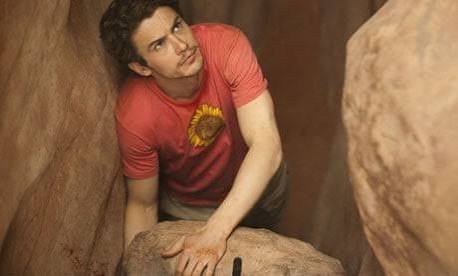
    Despite commanding a 93% by establishment critics and six Academy Award nominations, Danny Boyle’s 2010 adaptation of Aron Ralston’s memoir Between a Rock and a Hard Place arrives on the MGC bench showing deep, unmistakable circulation wear across its planchet. While James Franco delivers a committed, physically grueling performance trapped in Utah’s Bluejohn Canyon, Judge Bob’s forensic audit reveals why mainstream critical praise does not translate to Mint State luster—and why MGC F-11 is the exact grade this coin earns: 
    1. Single-Location Static Bottleneck: Once the dislodged boulder pins Ralston’s right arm in the narrow slot canyon early in Act I, the visual geography freezes for the vast majority of the 94-minute runtime. Even with Danny Boyle’s frenetic split-screens and camera gymnastics, spending over an hour wedged against the same rock wall wears down narrative momentum and visual variety. 
    2. Fictionalized Padding & Hallucination Filler (Historical Alloy Dilution): As Danny Boyle openly noted, he favored “emotional realism” over strict documentary accuracy to keep a stationary story moving. Under the historical loupe, that meant stretching Ralston’s brief real-life encounter with two lost hikers into an invented underground lagoon swim and party invitation, and inserting fabricated hallucinations—including a fictional TV game show, a flash-flood sequence, and imagined flashbacks to an ex-girlfriend that Ralston confirmed never occurred in the canyon. 
    3. Low Replayability & Gruesome Climax Wear: While key survival details—such as Ralston’s real video-diary farewells, rationing 600 ml of water, drinking his own urine, and the premonition of his future son—are faithfully preserved, the prolonged, visceral self-amputation with a dull multi-tool blade inflicts severe audience fatigue. Under MGC numismatic standards, a coin you can barely bring yourself to examine twice carries heavy circulation wear—dropping it cleanly into the F-12 to F-15 Registry at F-11. 
     
    🏆 🔍 THE FINAL DECREE & CERTIFIED JUDGMENT
    • The Final Executive Verdict: Respecting James Franco’s grit and Aron Ralston’s real-world will to survive, 127 Hours (2010) is nevertheless weighed down by a stationary canyon bottleneck, padded dream-sequence filler, and an excruciatingly un-rewatchable climax—permanently certified at MGC F-11.
    MGC Judge Bob slams his wooden gavel down with a crisp pop. Case Closed! 🧗‍♂️🪨⏳
  • 🌴🗺️💎ROMANCING THE STONE (1984)– XF-43

    ⚖ MGC Lower Court Docket: Case File #111
    Asset Title: Romancing the Stone (1984) – The Colombian Emerald Jungle-Bronco Ledger
    Official Registry Grade: Certified MGC XF-43 (Extremely Fine / Choice High-Adventure Comedy Specimen)
    Lower Court Jurisdiction: Lower Tribunal Room / 1980s Romantic-Adventure & Treasure-Hunt Docket
    Presiding: Judge Mina, Chief Grader MGC
    📜 The Forensic Narrative Breakdown & Luster Log
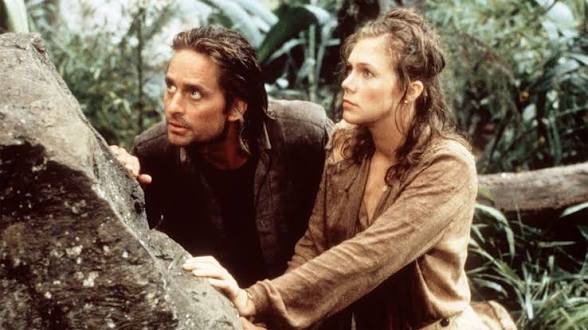
    The Presiding Judge places Robert Zemeckis’s 1984 adventure-comedy engine onto the velvet inspection pad and drops the strict 5x numismatic magnifying lens across every frame. This specimen hits the tribunal with undeniable 1980s crowd-pleasing luster—powered by Kathleen Turner’s sharp comedic transformation from sheltered romance novelist Joan Wilder into a mud-sliding jungle survivor, Michael Douglas’s roguish mercenary charm as Jack T. Colton, Danny DeVito’s scene-stealing comic timing as Ralph, and Pepe’s unforgettable custom “Little Mule” Ford Bronco.
    While the chemistry, practical stunt energy, and pure replay value strike solidly into high-grade working cinema, sliding the 5x lens across the full runtime reveals unmistakable mid-1980s production wear and convenient adventure shortcuts that anchor the specimen squarely at XF-43 inside the XF-40 to XF-45 Registry:
    🚨 The Three Specific Structural & Production Planchet Flaws:
    1. The Mid-1980s Synthesizer Score & Audio Wear:
      • The Defect: Alan Silvestri’s early electronic synthesizer score and era-specific sound design carry noticeable 1984 tonal wear compared to timeless orchestral adventure compositions.
      • The Forensic Data: Under close inspection, the dated synth cues and studio-era audio mix lightly flatten the atmospheric tension during key jungle pursuit sequences.
    2. Cartoonish Antagonist & Military Caricatures:
      • The Defect: Colonel Zolo and his pursuing Colombian troops function as broad, slapstick genre obstacles rather than grounded, high-stakes adversaries.
      • The Forensic Data: Because the villains operate on pure 1980s pulp-adventure caricature with minimal tactical friction, the physical danger never escalates beyond lighthearted escapism.
    3. Convenient Third-Act Fairy-Tale Plot Shortcuts:
      • The Defect: The climactic Cartagena fortress escape, crocodile emerald swallow, and sudden New York City sailboat reunion rely on breezy studio-romance coincidences to wrap every loose thread.
      • The Forensic Data: While completely faithful to the film’s pulp-novel premise, these rapid-fire narrative shortcuts introduce light circulation scuffs that prevent an upward crossover into About Uncirculated (AU) territory.
    ⚖ The Final Judicial Decree
    With all three structural and production flaws formally logged and sustained on the record, the corporate nostalgia glow is stripped away. Anchored by electric lead chemistry, effortless comedic pacing, practical jungle mud-slide stunts, and the legendary “Little Mule” Bronco, this specimen delivers top-tier drive-in replay value while holding its grade cleanly inside the upper Extremely Fine register.
    Permanently sealed in the archives as a Certified MGC XF-43 Choice Specimen. Case #111 is officially closed. 🌴🗺️💎🚙⚖