Author: MGC

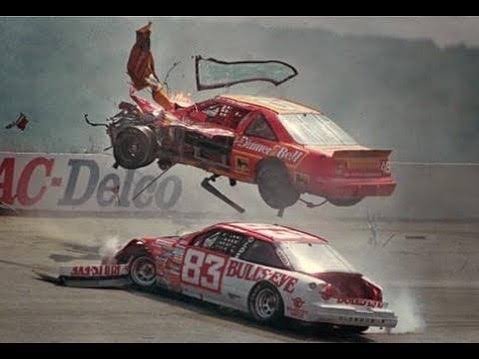
  • 💥SUPERBOWL OF CRASHES (1989)–PO-1

    🏛 MGC LOWER COURT OF APPEALS: CASE FILE #087
    • ASSET TITLE: 💥 SUPERBOWL OF CRASHES (1989) – The Direct-to-VHS Ripped Broadcast Wreck Compilation
    • OFFICIAL REGISTRY GRADE: Certified MGC PO-1 (Basal State Floor / Ripped-Footage Scrap Metal)
    • LOWER COURT JURISDICTION: Judge Tina, Chief of Cult Classics (Special Delivery by MGC Judge Bob)
     
    📜 THE FORENSIC NARRATIVE BREAKDOWN & BASEMENT HANDOFF
    Heavy work boots echo down the concrete steps into the damp, neon-flickering basement junk court. MGC Judge Bob marches straight up to the raw steel bench and slams a dusty 1989 VHS cassette onto the metal with a loud clatter.
    “How’d this junk end up in my court?!” Bob barks, wiping grease off his hands. “We already graded it for you—and it belongs down here in the scrapyard!”
    Tina walks up 👢👢 to the steel bench, brushes off a layer of 1980s magnetic tape dust, and slips the VHS planchet under the strict 5x magnifying lens.
    1. Zero Original Filmmaking & Ripped Broadcast Metallurgy: Under a cold, disciplined forensic review, this compilation tape contains zero original camera work, zero screenplay, and zero dramatic structure. The producers simply spliced together pirated broadcast NASCAR, ARCA, sprint-car, and monster-truck crashes from television feeds and slapped a flashy title on the box—pure Basal State scrap metal with zero original cinematic metallurgy.
    2. Uncalibrated Budget Voiceover & Muddy VHS Audio: The only original production effort consists of cheesy, uninspired budget voiceover narration laid over muffled, hiss-heavy magnetic tape audio that clips every time sheet metal hits a retaining wall.
    3. The Real-World Wreckage Eye Appeal: Despite the total lack of filmmaking craft, every single crash on the tape features 100% genuine, bone-rattling 180-mph motorsports physics. That authentic steel-bending eye appeal keeps the tape entertaining for late-night VHS collectors, even as its ripped-footage pedigree locks it permanently onto the concrete floor.
     
    ⚖ THE CHIEF’S FINAL DECREE
    Tina grabs the heavy-iron claw hammer from its custom gold mount, her emerald eyes gleaming with absolute, high-velocity judicial focus!
    “Bob’s 5x lens didn’t miss a single scratch! Zero original filmmaking and ripped broadcast footage keep this tape bolted to the concrete floor—even if the real-world sheet-metal wrecks make for a fun late-night spin!”
    🔨💥👗 Case Closed. Certified MGC PO-1 (Basal State Floor).
  • 💃 💅 🎪 SHOWGIRLS (1995) – F-11

    💃 💅 🎪 SHOWGIRLS (1995) – F-11
    🏛 MGC LOWER COURT OF APPEALS: CASE FILE #081
    • ASSET TITLE: Showgirls (1995) – The Official Neon Strip & Velvet Melodrama Ledger
    • OFFICIAL REGISTRY GRADE: Certified MGC F-11 (Fine Minus / Heavy Dialogue Wear on High-Grade Bullion)
    • LOWER COURT JURISDICTION: Judge Tina, Chief of Cult Classics
    📜 THE FORENSIC NARRATIVE BREAKDOWN & RECOVERY
    Tina walks up 👢👢 to the steel bench, tosses an empty champagne flute and a crumpled French fry wrapper into the trash can 🗑, and dials her 5x magnifying lens onto this glittering, deeply scuffed 1995 Las Vegas specimen.
    1. Studio-Grade Strike Depth vs. Catastrophic Script Corrosion
    Under an initial visual sweep, Paul Verhoeven’s Showgirls flashes the unmistakable metallic sheen of big-budget 1990s studio bullion. Shot in razor-sharp widescreen by Jost Vacano with massive Stardust stage choreography and blinding neon production design, the coin’s foundational visual strike is far too clean to drop into the G-tier basement.
    However, the moment Joe Eszterhas’s dialogue engine turns over, the planchet leaks technical engine oil all over the bench. The screenplay suffers from severe structural corrosion—characters pivot from sworn enemies to best friends in a single cut, subplots detonate without warning, and the narrative logic stalls out in a repetitive loop of backstage backstabbing and melodramatic screaming matches.
    1. Uncalibrated Acting Friction & Gina Gershon’s Stabilizing Alloy
    The performance metallurgy exhibits extreme, high-voltage friction under the 5x glass. Elizabeth Berkley attacks the role of Nomi Malone with relentless physical velocity, thrashing through scenes and delivering lines with an uncalibrated, jagged cadence that flattens the subtle dramatic details of the coin.
    Yet, just like a rare mint error that collectors fight over at auction, that unhinged commitment generates an undeniable midnight-movie entertainment velocity. Paired with Gina Gershon’s razor-sharp, deadpan camp precision as Cristal Connors—which acts as the sole stabilizing alloy keeping the narrative frame from snapping in half—the asset retains bold, unmistakable eye appeal despite the heavy surface scratches.
    1. The Definitive F-11 Slider Allocation
    Let the permanent registry reflect the unvarnished numismatic reality: mainstream corporate critics in 1995 tried to melt this coin down as toxic scrap metal, completely missing its savage satire and unmatched cult durability. At the same time, the MGC High Court cannot ignore the heavy script exhaust and acting fatigue holding it back from a clean F-12.
    It lands squarely on the F-11 line—a scarred, loud, gloriously garish Fine-Minus slider that rules the late-night circuit!
    ⚖ THE CHIEF’S FINAL DECREE
    Tina grabs her heavy 12-inch crescent wrench and brings it down onto the cold steel bench with a deafening, echoing metallic ring!
    “Different places, different names—same battered bullion! Let the ledger show that while Joe Eszterhas’s script took a sledgehammer to the dialogue engine, Verhoeven minted an immortal midnight-movie heavyweight!”
    🔧💥 💃 Case Closed. Certified MGC F-11.
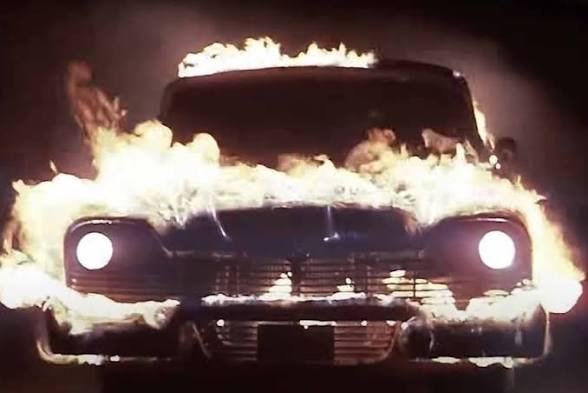
  • 👻 🔥 🔪 CHRISTINE (1983) – XF-46

    🏛 MGC LOWER COURT OF APPEALS: CASE FILE #080
    • ASSET TITLE: 👻 🔥 🔪 CHRISTINE (1983) – The Autumn-Red 1958 Plymouth Fury Restoration Strike
    • BASELINE BENCH ASSESSMENT: Room Allocation ➔ MGC XF-45 (Choice Extremely Fine / Supernatural Muscle-Car Workhorse)
    • PRESIDING DOCKET: MGC Judge Bob & Chief Justice MGC
     
    📜 THE INITIAL INQUEST & FORENSIC LOG (3-FLAW DEFECT LOG)
    Under a cold, disciplined 5x lens review, John Carpenter’s 1983 adaptation packs unmistakable mechanical and atmospheric striking power—Keith Gordon’s remarkable transformation from bullied high-school nerd into cold-eyed 1950s greaser, practical hydraulic reverse-crushing effects that still hold up over forty years later, a killer rock-and-roll needle-drop soundtrack, and Dean Cundey’s crisp Panavision widescreen photography. However, three localized structural defects hold the planchet at XF-45 rather than pushing into the XF-49 ceiling or About Uncirculated (AU-50):
    1. The Missing Origin Logic Scuff: Unlike Stephen King’s novel—where the car is explicitly possessed by the murderous spirit of its previous owner, Roland LeBay—Carpenter’s film leaves Christine’s supernatural evil completely unexplained from the Detroit assembly line onward, creating a noticeable narrative gap regarding why the Fury kills.
    2. The Sidelined Detective & Supporting Character Friction: Harry Dean Stanton’s Detective Junkins enters the second act with promising investigative tension, only to vanish completely from the third-act climax, leaving Dennis and Leigh to resolve the threat without any payoff to the police subplot.
    3. The Predictable Bulldozer-Crush Climax Loop: After building sinister psychological dread around Arnie’s corruption, the final act pivots into a standard 1980s slasher-style showdown inside Darnell’s garage—resolving the supernatural menace via a predictable heavy-machinery smash-up and a telegraphed final grille-twitch tease.

     
    ⚖ THE APPELLATE REVIEW & FINAL DECREE
    • Motion 3 (The Bulldozer-Crush Climax): OVERRULED. The Chief Justice struck down the predictability objection, ruling that the entire film operates on erratic, unpredictable supernatural logic where nobody knows what Christine will do next. Furthermore, the heavy-machinery crushing and practical hydraulic self-repair effects inside Darnell’s garage represent top-notch 1983 SFX craftsmanship that earn every bit of their climax velocity.
     
    🏆 🔍 THE FINAL DECREE & CERTIFIED JUDGMENT
      • The Final Executive Verdict: With Flaws 1 and 2 sustained on the record and Motion 3 forcefully overruled on practical SFX merit and unpredictable tension, the planchet secures its MGC XF-46 (Choice Extremely Fine Supernatural Workhorse) certification.
    MGC Judge Bob slams his wooden gavel down with a thunderous pop. Case Closed! 👻🔥🔪

     
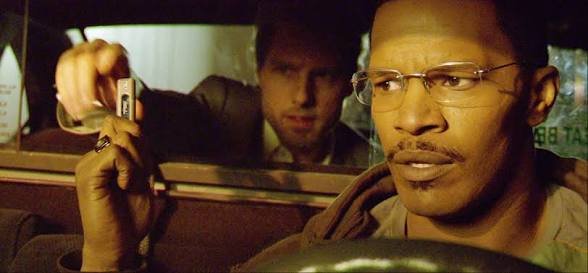
  • 🎷 🌃 🚕 COLLATERAL (2004)– XF-45

    ⚖ MGC Lower Court Docket: Case File #079
    Asset Title: Collateral (2004) – The Nocturnal Los Angeles Cab-Shift & Hitman Ledger
    Official Registry Grade: Certified MGC XF-45 (Extremely Fine / Top-Tier Circulated Thriller Specimen)
    Lower Court Jurisdiction: Lower Tribunal Room / 2000s Neo-Noir Crime Docket
    Presiding Panel: Judge Dex, Chief of R&D, Chief Grader MGC, and Chief Justice MGC
     
    📜 The Forensic Narrative Breakdown & Luster Log
    Under the strict 5x numismatic magnifying lens, Michael Mann’s 2004 nocturnal Los Angeles thriller delivers sharp two-hander tension—anchored by Tom Cruise’s ice-cold, silver-haired hitman discipline, Jamie Foxx’s grounded cabbie vulnerability, and the iconic “Yo homie, that my briefcase?” alley draw. However, stripping away 2004 legacy hype and examining fresh modern viewing metrics (including its original “B” CinemaScore) exposes severe third-act contrivances, police-subplot drag, and sudden character transformation that block any crossover into the AU vault and cap the coin at the XF-45 wine-glass ceiling:
     
    🚨 The Three Specific Structural & Tactical Planchet Flaws:
    1. The Third-Act “Annie Coincidence” & Metro Shootout Contrivance (Structural Planchet Fracture):Out of 10 million people in Los Angeles County, Vincent’s final contract target just happens to be Annie—the exact federal prosecutor Max gave a ride to at the start of his shift—culminating in a convenient subway-train power outage and glass-door shootout. Sliding the 5x lens across the final twenty minutes reveals heavy Hollywood screenwriting shortcuts that collapse two acts of street-level realism into pure action-movie luck.
    2. Max’s Sudden Combat-Driver & Tactical Evolution (Character Calibration Scuff): For nearly 90 minutes, Max is established as a timid, conflict-avoidant daydreamer who freezes under pressure—yet in the third act, he abruptly transforms into a fearless stunt driver who intentionally flips his cab at high speed and outguns a seasoned, Tier-1 contract killer in the dark, introducing noticeable behavioral friction across the coin’s finish.
    3. The Uncalibrated Fever-Nightclub & LAPD Subplot Drag (Pacing & Tactical Wear): Mark Ruffalo’s LAPD detective subplot spends half the movie piecing together clues only to walk straight into a chaotic, strobe-lit nightclub firefight where dozens of cartel gunmen, FBI agents, and hitmen miss point-blank shots before Vincent casually walks out. Combined with early-2000s low-light digital video noise that shows its age on modern screens, the bloated sequence leaves circulated handling wear across the middle register.
     
    ⚖ The Final Judicial Decree
    With all three structural, character, and pacing blemishes permanently locked on the record, 2004 legacy hype is officially stripped away. While Tom Cruise’s ice-cold hitman discipline, Jamie Foxx’s grounded first-two-acts cabbie work, and the nocturnal Los Angeles atmosphere claim the top ceiling of the wine-glass register, the contrived third-act Annie coincidence, sudden rookie-to-gunfighter transformation, and bloated nightclub firefight prevent any crossover into the AU vault.
    Permanently sealed in the archives as a Certified MGC XF-45 Choice Circulated Specimen. Case #079 is officially closed. 🍷🎷🌃🚕🔨
  • 🗺️ ⛈️ 🌊 ⏳ PRESSURE (2026) – MS-64

    🏛 MGC SUPREME COURT OF CONSENSUS: CASE FILE #106
    • ASSET TITLE: Pressure (2026) — Directed by Anthony Maras
    • OFFICIAL REGISTRY GRADE: Certified MGC MS-64 (Choice Mint State — High-Stakes Historical Meteorology Alloy)
    • HIGH BENCH JURISDICTION: Supreme Court Vault Active Docket
    • PRESIDING: Judge Sally, Judge Bob (True Story & Historical Forensics Specialist), and Chief Grader MGC 


    📜 THE INITIAL INQUEST BENCH ASSESSMENT (3-FLAW DEFECT LOG)
    • Baseline Bench Assessment: Room Allocation ➔ MS-64 Choice Mint State. Under our strict 5x numismatic magnifying lens, Pressure (2026) enters the uncirculated Mint State register on the strength of Andrew Scott’s razor-sharp turn as Group Captain James Stagg, Brendan Fraser’s commanding presence as General Dwight D. Eisenhower, and a suffocating 72-hour ticking-clock chamber atmosphere. However, because the film opens with an uncompromising “This is a true story” stamp, Judge Bob and the forensic bench audited every frame against declassified SHAEF and Met Office historical records—uncovering three distinct historical and structural planchet flaws that hold the coin at MS-64 prior to the Chief Justice’s appellate review. 


    🚨 THE THREE SPECIFIC PLANCHET FLAWS
    1. The “72-Hour Stranger” Timeline Distortion (Historical Chronology Scuff):
      • The Forensic Defect: To manufacture artificial dramatic urgency, the screenplay implies Group Captain James Stagg was abruptly summoned out of nowhere with just 72 hours left before D-Day and had to earn General Eisenhower’s trust from scratch. In reality, Stagg had served in wartime meteorological command since 1939 and was appointed Chief Meteorologist to SHAEF for Operation Overlord seven months earlier, in November 1943. He briefed Eisenhower once or twice daily for months and had already earned Ike’s complete confidence through months of 3-to-5-day test forecasts. Compressing a seven-month working partnership into a cold 72-hour introduction leaves an undeniable historical fingerprint on the planchet. 
    2. The Irving Krick & Kay Summersby Dramatic Fabrication (Fact-vs.-Fiction Alloy Contamination):
      • The Forensic Defect: Derived from David Haig’s 2014 stage play, the film manufactures a sharp ideological rivalry between Stagg and American meteorologist Col. Irving Krick—and invents subtle romantic/personal tension involving Eisenhower’s aide Kay Summersby—while cramming geographically separated forecasting teams into the same room. Historical logs confirm that Stagg and Krick actually worked in corroboration rather than bitter combat, and both agreed that June 6 was the viable window over June 5. Injecting stage-play interpersonal drama into a real military command room contaminates the pure historical alloy. 
    3. The Birth-Sequence & Physical Casting License (Biographical & Environmental Scuffs):
      • The Forensic Defect: The narrative bookends Stagg’s high-stakes forecast with the birth of his son inside a bombed hospital during the invasion window—when historically his son was not born until three days after D-Day—while casting a physically towering Brendan Fraser as a much taller Eisenhower than the real-life general (and dropping loud North American-style nighttime cricket audio onto a cool southern England coast). Under Judge Bob’s strict true-story audit, altering birth timelines and physical proportions to heighten emotional framing prevents the specimen from achieving uncirculated historical purity.
    ⚖ THE APPELLATE REVIEW & REVERSAL ARGUMENTS
    The Chief Justice sustained all three historical motions on the record:
    • Motion 1 (The 72-Hour Timeline Distortion): SUSTAINED. Compressing Stagg and Eisenhower’s seven-month partnership into a 72-hour window alters the genuine trust they had already built.
    • Motion 2 (The Krick & Summersby Stage Fabrication): SUSTAINED. Fabricating command-room rivalries and personal tension injects unnecessary theatrical tropes into a collaborative military effort.
    • Motion 3 (The Birth Timeline, Casting & Acoustic License): SUSTAINED. Shifting the birth of Stagg’s son into the D-Day invasion window (when he was actually born three days later) alters real family history for dramatic tension. Furthermore, layering a loud, continuous North American-style nighttime cricket chorus onto the southern England coast is a classic Hollywood sound-library error—while England is home to roughly two dozen native cricket species, UK nights are generally too cool and damp to produce the warm-weather nighttime chirping chorus heard in American summers. Both the altered birth date and the transplanted audio atmosphere remain sustained on the record as clear historical and environmental scuffs.

     
    🏆 🔍 THE FINAL DECREE & CERTIFIED JUDGMENT
    • The Final Executive Verdict: With all three historical motions sustained on the record, the specimen carries permanent theatrical fingerprints that keep it out of the upper Gem Mint shelves. However, anchored by commanding lead performances and taut chamber atmosphere, the Supreme Court certifies Pressure (2026) at an official MGC MS-64 (Choice Mint State Specimen) rating. Case closed! ⚖🏆
  • 💥 🚓 💰 TRAINING DAY (2001) – AU-54

    ⚖️ MGC Lower Court Docket: Case File #078
    • Asset Title: 💥 🚓 💰 Training Day (2001) – The 24-Hour LAPD Narcotics Corruption Ledger
    • Official Registry Grade: Certified MGC AU-54 (About Uncirculated / High-Velocity Street Strike)
    • Lower Court Jurisdiction: Lower Tribunal Room / Crime & Corruption Docket
    • Presiding Panel: Judge Morpheus (Chief Engineer & Appellate Judge), Chief Grader MGC, and Chief Justice MGC
    📜 THE INITIAL INQUEST BENCH ASSESSMENT (3-FLAW DEFECT LOG)
    • Baseline Bench Assessment: Room Allocation ➔ AU-51 About Uncirculated (Pending Appellate Overrides)
    Under cold forensic examination under the 5x magnifying lens, Antoine Fuqua’s 2001 crime thriller displays volcanic lead acting from Denzel Washington, sharp street-level cinematography, and relentless forward torque. However, the initial inquest panel logged three structural defects.
    1. The Compressed 24-Hour Clock Friction: Squeezing an entire undercover corruption indoctrination, a drug-house raid, a crooked judge payoff, a gang execution setup, and a neighborhood showdown into one single daylight-to-midnight shift leaves noticeable timeline compression wear across the second act.
    2. The Bathtub Wallet Coincidence Scuff: Jake Hoyt’s survival inside Smiley’s kitchen relies on discovering the rescued teenager’s wallet at the exact split second before execution—a high-tension dramatic save that carries a clear fingerprint of screenwriting convenience.
    3. Supporting Character Planchet Thinness: Outside of Alonzo Harris and Jake Hoyt, key figures—including the “Three Wise Men” power brokers and Roger—function primarily as brief plot catalysts rather than fully developed character strikes.
    ⚖️ THE APPELLATE REVIEW & REVERSAL ARGUMENTS
    Stepping directly up to the High Bench console, Judge Morpheus rejects the Prosecution’s defect log in full, issuing three consecutive overrides to drive the final consensus grade from AU-51 to AU-54:
    • Motion 1 (The Compressed 24-Hour Clock Friction): OVERRULED. The Court holds that locking rookie Jake Hoyt inside Alonzo’s Monte Carlo from morning coffee to midnight reckoning is the exact mechanical engine that makes the thriller work. Rather than creating narrative fatigue, the single-day pressure cooker keeps the pacing redlining with zero wasted frames.
    • Motion 2 (The Bathtub Wallet Coincidence Scuff): OVERRULED. The Court rejects the claim of cheap convenience. Jake’s earlier decision to intervene in the alley assault establishes the moral contrast between him and Alonzo; the wallet discovery is a direct, earned narrative payoff that turns Jake’s integrity into his literal shield.
    • Motion 3 (Supporting Character Planchet Thinness): OVERRULED. Every supporting appearance—from Scott Glenn’s Roger to the veteran power brokers at the diner—is struck with surgical economy to illuminate how deep Alonzo’s corruption network runs without ever pulling focus from the central psychological duel.
    🏆 🔍 THE FINAL DECREE & CERTIFIED JUDGMENT
    • The Final Executive Verdict: By overruling all three initial defect objections and recognizing Denzel Washington’s Oscar-winning strike as Detective Alonzo Harris alongside Ethan Hawke’s grounded foil, the Court certifies 💥 🚓 💰 Training Day (2001) into the AU-50 to AU-58 About Uncirculated Registry at an official consensus grade of MGC AU-54 (About Uncirculated / High-Velocity Street Strike). Case closed! 💥🚓💰
  • 👯 🐍 💥 DEATH PROOF (2007) – VF-35

    🏛 MGC LOWER COURT OF APPEALS: CASE FILE #077
    • ASSET TITLE: 👯 🐍 💥 DEATH PROOF (2007) – The Matte-Black 1970 Chevy Nova SS Stunt-Cage Strike
    • BASELINE BENCH ASSESSMENT: Room Allocation ➔ MGC VF-35 (Choice Very Fine / Split-Chassis Grindhouse Specimen)
    • PRESIDING DOCKET: MGC Judge Bob & Chief Grader MGC
     
    📜 THE INITIAL INQUEST & FORENSIC LOG (3-FLAW DEFECT LOG)
    Under a cold, disciplined 5x lens review, Quentin Tarantino’s 2007 tribute to 1970s muscle-car exploitation packs staggering mechanical striking power—real-metal stunt choreography with zero CGI, Zoë Bell strapped onto the hood of a 1970 Dodge Charger at highway speed, a roll-cage-reinforced 1970 Chevy Nova SS, and Kurt Russell switching seamlessly from charismatic barroom creep to whimpering bully. However, three clear structural defects keep this planchet pinned at VF-35 rather than crossing into Extremely Fine (XF-40+):
    1. The First-Half Barroom Dialogue Drag: Nearly half the runtime is spent idling in Austin bars and diners listening to protracted, circular hangout banter before Stuntman Mike ever turns the key—creating a heavy pacing scuff that stalls linear momentum across the opening act.
    2. The Two-Act Split-Chassis Reset: Killing off the entire initial cast in a sudden head-on collision at the midpoint and hitting a full narrative reset with a brand-new group of women in Tennessee fractures the story’s continuous structural velocity.
    3. The Artificial Grindhouse Scratch & Reel-Jump Wear: While the intentional film-grain filters, missing-reel jump cuts, and color-bleed overlays honor 1970s drive-in nostalgia, they also introduce deliberate visual surface wear—and vanish abruptly in the second half—creating an uneven planchet finish.

     
    ⚖ THE APPELLATE REVIEW & PARTIAL-SPLIT RULING
    The Chief Justice audited all three motions under the 5x magnifying lens, holding the baseline allocation steady at VF-35:
    • Motion 1 (The First-Half Barroom Dialogue Drag): SUSTAINED. The Court confirms that nearly forty minutes of circular Austin diner and barroom banter stalls the linear throttle before the heavy iron ever hits the asphalt.
    • Motion 2 (The Two-Act Split-Chassis Reset): SPLIT / NEUTRALIZED ON THE RECORD. While wiping out the entire opening cast at the midpoint fractures traditional single-track narrative continuity, the shock value successfully clears the deck for Zoë Bell and the 1970 Dodge Charger crew to deliver one of the greatest practical road chases ever filmed. Net point adjustment: 0.
    • Motion 3 (The Artificial Grindhouse Scratch & Reel-Jump Wear): SUSTAINED. The deliberate film-grain filters and missing-reel jump cuts create noticeable surface wear—and vanishing completely in the Tennessee half leaves an uneven planchet finish.
     
    🏆 🔍 THE FINAL DECREE & CERTIFIED JUDGMENT
    • The Final Executive Verdict: With Motions 1 and 3 sustained and the midpoint reset ruling a wash, the Lower Court holds the baseline allocation firm with zero upward adjustment. Practical stunt choreography and Kurt Russell’s dual-gear performance anchor it cleanly at the top of the mid-Very Fine pack. The final, certified consensus score is permanently chiseled into the registry at MGC VF-35 (Choice Very Fine Specimen).
    MGC Judge Bob slams his wooden gavel down with a thunderous pop. Case Closed! 👯🐍💥
  • 💥 💀 💣 DEATH RACE (2008) – VF-24

    🏛 MGC LOWER COURT OF APPEALS: CASE FILE #076
    • ASSET TITLE: 💥 💀 💣 DEATH RACE (2008) – The Terminal Island Armored V8 Mustang Strike
    • BASELINE BENCH ASSESSMENT: Room Allocation ➔ MGC VF-24 (Low-Mid Very Fine / Heavy-Metal Prison-Track Specimen)
    • PRESIDING DOCKET: MGC Judge Bob & Chief Justice MGC
     
    📜 THE INITIAL INQUEST & FORENSIC LOG (3-FLAW DEFECT LOG)
    Under a cold, disciplined 5x lens review, Paul W.S. Anderson’s 2008 heavy-alloy re-strike packs unmistakable mechanical striking power—real welded steel armor plates, tombstone-reinforced Mustangs, twin M134 miniguns, napalm droppers, roaring supercharged V8 audio, and Jason Statham delivering peak blue-collar stoicism alongside Ian McShane’s gravel-voiced pit-crew chief. However, three clear structural defects weigh down the planchet and hold it at VF-24:
    1. The Hyper-Kinetic Quick-Cut Editing Fatigue: During the three-stage Terminal Island track battles, rapid sub-second camera cuts and shaky-cam impacts frequently obscure the spatial geography of the wrecks, creating noticeable visual circulation wear across otherwise impressive practical vehicle stunts.
    2. The Thin Corporate-Warden & Frame-Up Script Alloy: The setup framing Jensen Ames for his wife’s murder—combined with Joan Allen’s cartoonishly villainous Warden Hennessey screaming profanities for pay-per-view ratings—relies on razor-thin B-movie plot convenience rather than tight narrative tension.
    3. The Predictable Three-Stage Track Loop: Structuring the runtime strictly around Stage 1, Stage 2, and Stage 3 eliminations before a telegraphed prison-break finale creates a linear, video-game-level repetition that prevents the story from shifting into a higher gear.

     🔍 THE FINAL DECREE & CERTIFIED JUDGMENT

    • The Final Executive Verdict: With all three defects sustained, the appellate review denies any score bump. Practical stunt work and heavy-metal aesthetics balance out the narrative and editing flaws, cementing the final certified score at MGC VF-24 (Low-Mid Very Fine Specimen).
    MGC Judge Bob slams his gavel down. Case Closed! 💥💀💣
  • 🌴 💪 💣 COMMANDO (1985) – VF-33

    ⚖ MGC INITIAL INQUEST: COMMANDO (1985) — CASE FILE #075
    Asset Title: Commando (1985) — The Val Verde Garden-Shed Arsenal & Yellow-Porsche Ledger
    Initial Inquest Baseline: VF-33 (Very Fine / Circulated 1980s One-Man-Army Specimen) 🏎️
    Jurisdiction: Lower Tribunal Room / 1980s High-Body-Count Action Docket
    Presiding Forensic Examiner: Judge Dex, Chief of R&D & Action Judge
     
    📜 The Initial Bench Assessment
    Under the 5x numismatic lens, Mark L. Lester and Arnold Schwarzenegger’s 1985 action benchmark is pure, uncut 1980s drive-in entertainment—delivering iconic one-liners (“Let off some steam, Bennett”), muscular pacing, and relentless explosive velocity. However, once the nostalgic adrenaline settles, the specimen exhibits blatant cartoon ballistics, continuity magic, and zero tactical realism that anchor it squarely in the circulated VF-20 to VF-37 race-car tier:
     
    🚨 The 3-Flaw Defect Log
    1. The Garden-Shed Infinite-Ammo & Ballistic Physics Void (Combat Realism Wear):
      • The Defect: After raiding a single suburban surplus store and garden shed, John Matrix single-handedly wipes out an entire private army of over 80 heavily armed mercenaries on an island compound without ever reloading on screen, taking cover, or catching a single lethal round in open daylight.
      • The Forensic Data: Sliding the 5x lens across the climactic compound assault reveals pure video-game god-mode mechanics—enemies politely run out from behind concrete cover into open gunfire while Matrix hip-fires a belt-fed M60 like a featherweight toy.
    2. The Self-Repairing Yellow Porsche Continuity Scuff (Technical Planchet Flaw):
      • The Defect: During the chaotic Los Angeles chase sequence, Sully’s bright yellow Porsche 911 is violently flipped, crushed down the entire passenger side, and dragged across asphalt—only to magically appear completely pristine and dent-free seconds later when Matrix drives off in it.
      • The Forensic Data: Even without a magnifying loupe, the glaring continuity error breaks physical immersion and highlights the fast-and-loose 1980s production polish.
    3. The Chainmail-Vest Villain & Commercial-Airliner Logic Gap (Antagonist & Plot Friction):
      • The Defect: Vernon Wells’s villain Bennett—sporting a knitted chainmail tank top and mustache—trades machine guns for a knife fight strictly out of ego, while Matrix’s escape from a commercial airliner by dropping out of the wheel well into a swamp right before takeoff defies basic aviation security and physics.
      • The Forensic Data: While endlessly entertaining as pure 1980s camp, the cartoonish villain wardrobe and impossible airport escape firmly separate Commando from grounded tactical thrillers in the XF or AU vaults.


    ⚖ THE FINAL JUDICIAL DECREE
    With all three ballistic, continuity, and logical defects permanently locked on the record, the 1980s one-man-army adrenaline is calibrated cleanly against reality. While iconic one-liners, muscular pacing, and explosive drive-in entertainment value keep the specimen comfortably in the upper half of the race-car tier, the infinite-ammo garden-shed raid, self-repairing yellow Porsche, and chainmail-vest villainy prevent any promotion into the XF wine-glass register.
    Permanently sealed in the archives as a Certified MGC VF-33 Choice Circulated Specimen. Case #075 is officially closed. 🏎️🌴💪💣

  • 🚀🪐🧠 TOTAL RECALL (1990) – XF-43

    ⚖ MGC INITIAL INQUEST: TOTAL RECALL (1990) — CASE FILE #074
    Asset Title: Total Recall (1990) — The Rekall Memory-Implant & Mars-Decompression Ledger
    Initial Inquest Baseline: XF-43 (Extremely Fine / Circulated Sci-Fi Specimen) 🍷
    Jurisdiction: Lower Tribunal Room / 1990s Practical-Effects Sci-Fi Docket
    Presiding Forensic Examiner: Judge Dex, Chief of R&D & Action Judge
     
    📜 The Initial Bench Assessment
    Under the 5x numismatic lens, Paul Verhoeven and Arnold Schwarzenegger’s 1990 sci-fi blockbuster commands undeniable practical-effects luster—featuring Rob Bottin’s grotesque animatronic prosthetics, tactile red-planet miniature sets, and Jerry Goldsmith’s thundering orchestral score. However, once the 1990s novelty dust settles, the narrative planchet reveals convoluted plot mechanics, heavy B-movie camp, and reckless action choreography that bar it from the AU-50+ vault and anchor it squarely in the XF-40 to XF-45wine-glass tier:
     
    🚨 The 3-Flaw Defect Log
    1. The “Dream-or-Real” Structural Contradiction (Narrative Alloy Fracture):
      • The Defect: The screenplay tries so hard to straddle the ambiguity of whether Douglas Quaid is living a Rekall memory implant or an actual Martian espionage mission that neither explanation survives basic logical scrutiny.
      • The Forensic Data: Sliding the 5x lens across Cohaagen’s master plan exposes massive plot holes—specifically why the villain would erase his top agent’s memory, plant him with a fake wife, and trigger an elaborate wild-goose chase just to infiltrate a resistance he already controlled.
    2. The Third-Act Mutant-Camp & Eyeball-Bulge Wear (Tonal Surface Corrosion):
      • The Defect: Between the three-breasted bar patron at The Last Resort, the psychic Kuato stomach-parasite, and Quaid’s comical bulging-eyeball decompression on the Martian surface before the alien reactor instantaneously terraforms an entire planetary atmosphere in 60 seconds, the film veers heavily into B-movie absurdity.
      • The Forensic Data: While memorable as 1990s pop-culture novelty, the jarring tonal swings and cartoon physics strip away the serious sci-fi weight required for About Uncirculated (AU) status.
    3. The Escalator Human-Shield & Chaotic Shootout Friction (Hero Calibration Scuff):
      • The Defect: During the subway escalator firefight, Quaid casually grabs an innocent civilian bystander and uses him as a human meat-shield to absorb automatic gunfire—a bizarrely callous beat that clashes with his supposed everyman hero arc.
      • The Forensic Data: Combined with noisy, uncalibrated corridor shootouts where dozens of armored Mars troopers miss every shot at point-blank range, the action mechanics show noticeable handling wear compared to tightly disciplined action classics.
    ⚖ THE FINAL JUDICIAL DECREE
    With all three structural, tonal, and tactical defects permanently locked on the record, the 1990s practical-effects novelty is officially separated from narrative discipline. While Rob Bottin’s grotesque prosthetics, tactile Mars miniatures, and Jerry Goldsmith’s thundering score keep the specimen comfortably inside the wine-glass tier, the convoluted Rekall plot holes, B-movie camp, and unheroic escalator choreography prevent any crossover into the AU vault.
    Permanently sealed in the archives as a Certified MGC XF-43 Choice Circulated Specimen. Case #074 is officially closed. 🍷🚀🪐🧠