Author: MGC

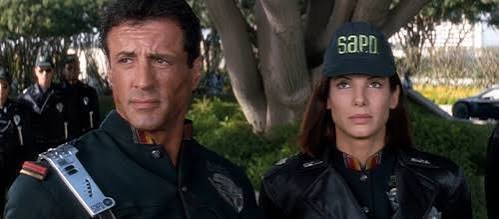
  • 🧊 💥 DEMOLITION MAN (1993)– XF-43

    ⚖ MGC Lower Court Docket: Case #112
    Asset Title: 🧊 💥 Demolition Man (1993) – The San Angeles Cryo-Prison & Three Seashells Ledger
    Official Registry Grade: Certified MGC XF-43 (Extremely Fine / High-Concept 1990s Sci-Fi Action Specimen)
    Lower Court Jurisdiction: Lower Tribunal Room / 1990s Sci-Fi & Action Satire Docket
    Presiding Panel: Judge Dex, Chief of R&D, Chief Grader MGC, and Chief Justice MGC
     
    📜 The Forensic Narrative Breakdown
    Marco Brambilla’s Demolition Man freezes Sylvester Stallone’s rogue LAPD cop and Wesley Snipes’ unhinged Simon Phoenix in 1996 before thawing them out into the sanitized, Taco Bell-ruled utopia of 2032 San Angeles. Powered by Snipes’ electric, bleached-blonde villainy, Sandra Bullock’s scene-stealing charm, and surprisingly prescient social satire, the film delivers top-shelf 1990s entertainment while exhibiting expected genre circulation wear that holds it squarely at XF-43.
     
    🚨 Key Planchet Flaws:
    1. Unapologetic 1990s Action Cheese: Broad machismo one-liners and comic-book villain monologues trade dramatic subtlety for pure nostalgic spectacle.
    2. Stiff Back-Half Choreography: Several hand-to-hand combat sequences rely on dated early-90s framing and editing rather than crisp modern action mechanics.
    3. Formulaic Third-Act Showdown: Once the satirical world-building settles, the narrative funnels into a conventional cryo-chamber finale that prioritizes explosions over thematic payoff.
     
    ⚖ The Final Judicial Decree
    With razor-sharp satirical foresight, endless quotability, and a standout villain performance from Wesley Snipes, Demolition Man easily clears the workhorse XF threshold—locking in at XF-43 alongside fellow 1990s sci-fi staple Total Recall.
    Permanently sealed in the archives as a Certified MGC XF-43 Extremely Fine Specimen. Case #112 is officially closed. 🎬🧊💥
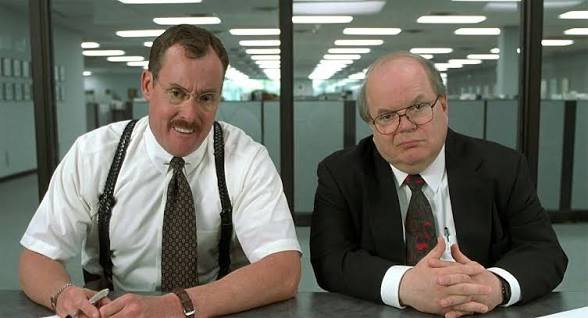
  • ☕️ 🖨️ 🔨 OFFICE SPACE (1999) – AU-56

    ⚖ MGC Lower Court Docket: Case File #107
    Asset Title: ☕️ 🖨️ 🔨 Office Space (1999) – The Initech Cubicle & TPS Report Ledger
    Official Registry Grade: Certified MGC AU-56 (About Uncirculated / High-Luster Workplace Satire Specimen)
    Lower Court Jurisdiction: Lower Tribunal Room / 1990s Corporate Satire Docket
    Presiding Panel: Judge Dex, Chief of R&D, Chief Grader MGC, and Chief Justice MGC
     
    📜 The Forensic Narrative Breakdown
    Mike Judge’s Office Space dissects late-1990s cubicle purgatory with lethal comedic precision, anchored by Gary Cole’s passive-aggressive Bill Lumbergh, Stephen Root’s stapler-obsessed Milton, and Ron Livingston’s hypnotized corporate liberation. Nearly every line and deadpan reaction strikes with full Mint State luster, while only whisper-light third-act structural wear keeps it just outside the MS-60 vault at AU-56.
     
    🚨 Key Planchet Flaws:
    1. Third-Act Embezzlement Pivot: Once Peter, Michael, and Samir deploy the decimal-rounding virus, the film shifts from razor-sharp observational satire into a slightly rushed caper plot.
    2. Utilitarian 1999 Visual Framing: Shot with functional late-1990s comedy cinematography that serves the deadpan humor cleanly without adding Mint State visual polish.
     
    ⚖ The Final Judicial Decree
    With immortal comedic strike power, razor-sharp ensemble chemistry, and endless cultural replay value, Office Space earns an upper-tier AU-56—celebrating near-uncirculated satirical brilliance while noting faint third-act plot friction under the 5x lens.
    Permanently sealed in the archives as a Certified MGC AU-56 About Uncirculated Specimen. Case #107 is officially closed. 🥈☕️🖨️🔨
  • 🐠💎A FISH CALLED WANDA (1988)–AU – 52

    🐠💎 A FISH CALLED WANDA (1988) – AU-52
    🏛 MGC LOWER COURT OF APPEALS: CASE FILE #110
    • ASSET TITLE: A Fish Called Wanda (1988) – The Official Hatton Garden & Stuttering Hitman Ledger
    • OFFICIAL REGISTRY GRADE: Certified MGC AU-52 (About Uncirculated / High-Velocity Ensemble Alloy with Light Pacing Wear)
    • LOWER COURT JURISDICTION: Judge Tina, Chief of Cult Classics
    📜 THE FORENSIC NARRATIVE BREAKDOWN & RECOVERY
    Tina approaches the steel bench and inspects the 1988 Anglo-American heist film under her 5x magnifying lens.
     
    1. Ensemble Performance & Comedic Chemistry
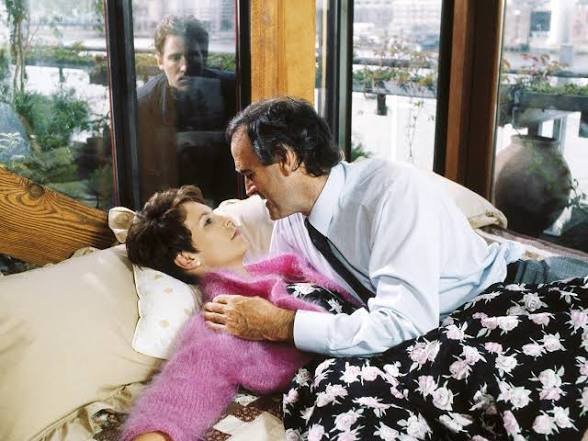
    Co-written by John Cleese and directed by Charles Crichton, the film features a high-voltage cast. Kevin Kline delivers an Oscar-winning performance as the volatile Otto, paired with Jamie Lee Curtis as the double-crossing Wanda, Michael Palin as the stammering, animal-loving Ken, and Cleese as the uptight barrister Archie Leach. The dynamic between the four carries the diamond heist plot from Hatton Garden to Heathrow with sharp comedic timing.
     
    2. Minor Second-Act Pacing Issues
    While the physical comedy and dark humor—particularly the misadventures involving Mrs. Coady’s dogs—remain potent, the film exhibits slight structural drag in the middle reel. The romantic entanglement between Archie and Wanda occasionally slows the narrative momentum, preventing the film from achieving a pristine Mint State rating.
     
    3. Final AU-52 Grade Determination
    A Fish Called Wanda stands as a benchmark of Ealing-style farce and 1980s cult comedy. Minor second-act lulls and slight period-specific visual pacing keep it just shy of uncirculated status, locking it solidly into the AU-50 tier for a sharp-struck classic with minimal surface wear.
    ⚖️ BENCH REVERSAL & APPELLATE BUMP (AU-50 ➔ AU-52)
    Tina pauses with her 12-inch crescent wrench mid-air, peers back through the 5x loupe at the second-act ledger, and scratches out a red-ink correction on the docket.
    Objection Sustained on the Romance Sub-Plot: Initial inspection flagged the Archie-and-Wanda entanglement as a narrative drag, but a closer forensic strip-down reveals the exact opposite—that romance is the load-bearing beam holding the entire farce together. Without Wanda working Archie for the safe key, Otto never loses his mind, nobody collides in the apartment hideout, and the comedic engine never hits redline.
    Because that romantic friction actually fuels the film’s sharpest set pieces rather than stalling them, the Court officially overrules the second-act pacing penalty and bumps the asset two points up the numismatic ladder from AU-50 to a locked AU-52—leaving only minor 1980s flat lighting to keep it out of Mint State.
    ⚖ THE CHIEF’S FINAL DECREE
    Tina strikes the steel bench with her crescent wrench to seal the judgment.
    “Don’t call it stupid—and don’t call it Mint State! Kevin Kline’s unhinged velocity and Michael Palin’s loyal defense carry this heist bullion straight to the AU-52 vault!”
    🔧💥 🐠💎 Case Closed. Certified MGC AU-52.
  • 👨🧠🧠THE MAN WITH TWO BRAINS (1983) – XF43

    ⚖ MGC Lower Court Docket: Case File #109
    Asset Title: The Man with Two Brains (1983) – The Vienna Crimson-Cranial Screw-Top Ledger
    Official Registry Grade: Certified MGC XF-43 (Extremely Fine / Choice High-Velocity Comedy Specimen)
    Lower Court Jurisdiction: Lower Tribunal Room / 1980s Absurdist Farce & Screwball Docket
    Presiding: Judge Mina, Chief Grader MGC
    📜 The Forensic Narrative Breakdown & Luster Log
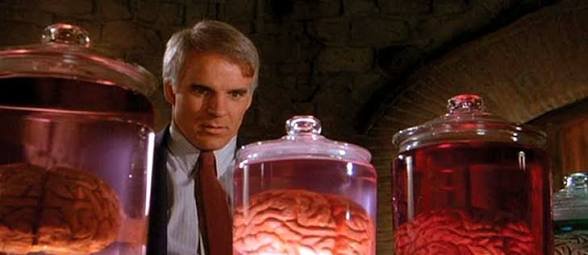
    The Presiding Judge places Carl Reiner’s 1983 absurdist comedy engine onto the velvet inspection pad and drops the strict 5x numismatic magnifying lens across every frame. Calibrated directly against our established XF-44 benchmark, this specimen enters the tribunal with elite comedic luster—driven by Steve Martin’s razor-sharp surgical deadpan as Dr. Michael Hfuhruhurr, Kathleen Turner’s wickedly calibrated gold-digger turn as Dolores Benedict, and Sissy Spacek’s disembodied vocal charm as Anne Uumellmahaye.
    While the comic timing and screwball chemistry strike deep into high-grade territory, sliding the 5x lens across the full runtime reveals deliberate structural shortcuts and mid-tier production wear that anchor the specimen squarely at XF-43 inside the XF-40 to XF-45 Registry:
    🚨 The Three Specific Structural & Production Planchet Flaws:
    1. The Episodic Sketch-Comedy Pacing Scuffs:
      • The Defect: Rather than building an escalating, tightly wound narrative arc, the script operates as a string of self-contained comedic blackout sketches stitched around a thin murder-mystery frame.
      • The Forensic Data: Transitions between set pieces—such as the Drunkometer alphabet test, the Elevator Killer subplot, and the Vienna laboratory sequences—show visible narrative seams that keep the specimen one click below (XF-44).
    2. Low-Budget Vienna Lab & Set-Design Wear:
      • The Defect: Outside of its sunny location exteriors, the interior sets—most notably Dr. Necessiter’s cramped Vienna apartment and glowing-jar brain vault—exhibit noticeable 1980s studio stage wear and flat visual depth.
      • The Forensic Data: Under close inspection, the minimal production polish and utilitarian camera framing read as pure studio comedy rather than high-luster cinema craft.
    3. The Third-Act Body-Swap Logic Shortcut:
      • The Defect: The climactic brain-transfer resolution leans on rapid-fire farce coincidences and a sudden, slapdash body-swap payoff to wrap every thread in the final ten minutes.
      • The Forensic Data: While true to the movie’s anarchic tone, the abrupt mechanical shortcut leaves minor handling friction across the closing stretch, preventing an upward crossover into About Uncirculated (AU) territory.
    ⚖ The Final Judicial Decree
    With all three structural and production flaws formally logged and sustained on the record, the corporate nostalgia glow is stripped away. Anchored by peak Steve Martin physical comedy, Kathleen Turner’s fearless comic villainy, and effortless 1980s screwball momentum, this specimen holds its value cleanly without slipping into circulated Very Fine (VF) scrap.
    Permanently sealed in the archives as a Certified MGC XF-43 Choice Specimen. Case #109 is officially closed. 👨🧠🧠🍸⚖
  • 🏛️ 🎬 📺 🐕 WAG THE DOG (1997) – XF-42

    ⚖ MGC APPELLATE DOCKET: CASE FILE #108
    • ASSET TITLE: 🏛️ 🎬 📺 🐕 WAG THE DOG (1997) – The Manufactured Albanian War & Spin-Doctor Strike
    • OFFICIAL REGISTRY GRADE: Certified MGC XF-42 (Extremely Fine / Razor-Sharp Political Satire Specimen)
    • COURT JURISDICTION: Appellate & Historical Satire Bench / Political Comedy Docket
    • PRESIDING DOCKET: MGC Judge Bob (True Story & Historical Forensics Specialist) & Chief Justice MGC
     
    📜 THE FORENSIC NARRATIVE BREAKDOWN & LUSTER LOG
    As MGC’s resident specialist on truth, history, and fabrication, examining Barry Levinson’s 1997 dark political comedy under the 5x loupe reveals a coin packed with biting wit and chillingly prophetic cultural insight. Adapted from Larry Beinhart’s novel American Hero with a razor-edged script co-written by David Mamet, the film chronicles Washington fixer Conrad Brean (Robert De Niro) teaming up with eccentric Hollywood producer Stanley Motss (Dustin Hoffman) to stage a completely fictional war with Albania—complete with fake news footage, a fabricated war hero (Woody Harrelson), and a manufactured theme song—to distract voters days before a presidential election. High-relief comedic craft and unsettling real-world resonance plant this specimen firmly in the Extremely Fine (XF-40 to XF-45) Registry:
    1. Masterclass Deadpan Chemistry (De Niro & Hoffman): Robert De Niro plays Conrad Brean with ice-cold, understated Washington pragmatism, creating an electric comedic foil to Dustin Hoffman’s vain, manic, Oscar-obsessed Hollywood producer Stanley Motss—who treats a constitutional crisis like a prestige studio production.
    2. David Mamet’s Rhythmic, Cynical Dialogue: The script crackles with overlapping banter, media-spin aphorisms (“Why does a dog wag its tail?”), and ruthless precision that turns every backroom brainstorming session into high-wire verbal comedy.
    3. Eerie Real-World & Historical Foreshadowing: Released just weeks before the 1998 Monica Lewinsky scandal and subsequent U.S. cruise-missile strikes dominated headlines, the film’s dissection of manufactured media narratives, viral distraction campaigns, and “truth by repetition” remains startlingly relevant decades later.
    4. Why It Stops at XF-42 Instead of AU-50: Light circulation wear appears in its theatrical, dialogue-heavy chamber staging, an abrupt and cynical final-act resolution for Stanley Motss that cuts off momentum slightly suddenly, and late-1990s network-news aesthetics that anchor it firmly in its era.
     
    🏆 🔍 THE FINAL DECREE & CERTIFIED JUDGMENT
    • The Final Executive Verdict: Anchored by powerhouse performances from Robert De Niro and Dustin Hoffman, razor-sharp Mamet satire, and uncanny historical foresight into modern media manipulation, Wag the Dog (1997) preserves crisp detail and strong comedic luster—permanently sealed at Certified MGC XF-42.
    MGC Judge Bob slams his wooden gavel down with a crisp pop. Case Closed! 🏛️🎬📺🐕
  • 🏃🏼🏃🏽‍♀️🔔🤡 WEAPONS (2025) – VF-38

    🏛 MGC RESOURCES COURT: INITIAL INQUEST CASE FILE #115
    • ASSET TITLE: Weapons (2025) – The 2:17 AM Small-Town Disappearance Ledger
    • OFFICIAL REGISTRY GRADE: Certified MGC VF-38 (Choice Very Fine / High-Concept Horror Ensemble)
    • PRESIDING JUDGE: Judge Mina, Chief of Resources (Ruby Room)
    📜 THE FORENSIC NARRATIVE BREAKDOWN & RECOVERY
    Baseline Bench Assessment: Room Allocation ➔ VF-37 (Choice Very Fine).  
    Forged by writer-director Zach Cregger as a multi-perspective follow-up to Barbarian, Weapons (2025) opens with a chilling, high-strike mystery hook: at precisely 2:17 AM, seventeen children from a single elementary school classroom simultaneously rise from bed, sprint into the dark with arms outstretched, and vanish without a trace. Anchored by raw, grounded turns from Josh Brolin and Julia Garner alongside hypnotic small-town dread, the specimen demonstrates undeniable collector eye appeal—yet close inspection under the 5x lens exposes three distinct structural defects keeping it out of the XF vaults.
    🚨 THE THREE SPECIFIC PLANCHET FLAWS:
    1. The Multi-POV Momentum Reset (Chapter Pacing Friction): By fracturing the timeline across six separate character chapters—repeatedly rewinding the clock to re-cover identical events from new angles—the narrative engine stalls right when investigative tension reaches peak velocity.
    2. The Clown-Witch Tone Whiplash (Third-Act Alloy Imbalance): The late-game unmasking of Aunt Gladys (Amy Madigan) as an eccentric, clown-faced occult parasite pivots abruptly from grounded suburban psychological dread into theatrical camp comedy, undermining the eerie mystery built across the first two hours.
    3. The Unanswered Setup Residue (Loose-End Planchet Pits): Several heavily telegraphed visual clues and symbolic motifs—including the floating assault rifle nightmare, the 2:17 AM timestamp symmetry, and the lingering trauma mechanics of the surviving child—are left partially unresolved once the climax dissolves into chaotic slapstick chase beats.
    🚨 CHIEF EXECUTIVE APPELLATE RULINGS:
    1. Multi-POV Momentum: SUSTAINED (Pacing friction slows third-act tension).
    2. Clown-Witch Tone: OVERRULED (Any entity capable of forcing self-harm via face-stabbing is certified terrifying).
    3. Unanswered Setup Residue: SUSTAINED (Surreal imagery like the floating rifle remains unresolved).
    ⚖ FINAL VERDICT: Locked into the registry as a VF-38 Choice Very Fine.
  • ✈️ 🏔️🥶🥩ALIVE (1993) – F-17

    ⚖ MGC LOWER COURT DOCKET: CASE FILE #105
    • ASSET TITLE: ✈️ 🏔️ 🥶 🥩 ALIVE (1993) – The 1972 Andes Flight 571 Survival Strike
    • OFFICIAL REGISTRY GRADE: Certified MGC F-17 (Fine / Heavily Circulated Hollywood Sanitization Specimen)
    • LOWER COURT JURISDICTION: Lower Tribunal Room / Historical Survival & Drama Docket
    • PRESIDING DOCKET: MGC Judge Bob & Chief Justice MGC
     
    📜 THE FORENSIC NARRATIVE BREAKDOWN & LUSTER LOG
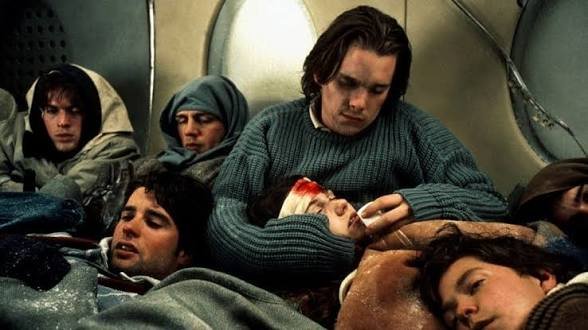
    While the Movie Grading Consensus (MGC) typically awards a strong true-story premium to real historical survival accounts, Frank Marshall’s 1993 adaptation of Piers Paul Read’s book suffers severe surface wear under our 5x lens. Despite a visceral, terrifying opening plane crash sequence and breathtaking mountain location photography, the film’s relentless 1990s Hollywood gloss, clean-cut casting, and sanitized depiction of 72 days in the freezing Andes strip away its raw historical authenticity—dropping this specimen straight into the Fine (F-12 to F-19) Registry:
    1. Sanitized Hollywood Gloss & Clean-Cut Casting: Instead of conveying the gaunt, frostbitten, emaciated reality of the Uruguayan rugby team stranded at 11,000 feet, the cast—led by Ethan Hawke and Vincent Spano—looks suspiciously well-fed, groomed, and cleanly lit throughout two months of sub-zero starvation.
    2. After-School Special Melodrama & Speechifying: Heavy-handed, sentimental dialogue and clunky moral debates replace the raw psychological desperation of the actual survival ordeal, flattening the narrative into a glossy 1990s network-TV drama.
    3. Pacing Drag & Repetitive Snowbound Blocking: Once the visceral, white-knuckle plane crash ends in the opening act, the middle hour bogs down in repetitive cabin conversations, avalanche filler, and sluggish dramatic momentum before Nando Parrado and Roberto Canessa finally hike out for rescue.
    4. Cultural & Linguistic Disconnect: Casting American actors speaking standard Californian English—narrated by an inexplicably formal John Malkovich voiceover—dilutes the authentic Uruguayan cultural identity of the real survivors.
     
    🏆 🔍 THE FINAL DECREE & CERTIFIED JUDGMENT
    • The Final Executive Verdict: Although the harrowing opening fuselage crash and real-life heroism of Nando Parrado and Roberto Canessa’s 10-day trek across the Andes preserve enough baseline structural integrity to keep this coin above Very Good (VG) territory, its sanitized Hollywood polish, sluggish mid-film pacing, and TV-movie melodrama permanently seal it at Certified MGC F-17.
    MGC Judge Bob slams his wooden gavel down with a crisp pop. Case Closed! ✈️🏔️🥶🥩
  • 🍖👹🩸🍲RAVENOUS (1999) – VF-31

    ⚖ MGC Lower Court Docket: Case File #104
    Asset Title: Ravenous (1999) – The Fort Spencer Frontier Cannibalism Ledger
    Official Registry Grade: Certified MGC VF-31 (Very Fine / Circulated Cult Horror-Western Specimen)
    Lower Court Jurisdiction: Lower Tribunal Room / 1990s Cult Horror & Survival Docket
    Presiding Panel: Judge Dex, Chief of R&D, Chief Grader MGC, and Chief Justice MGC
     
    📜 The Forensic Narrative Breakdown
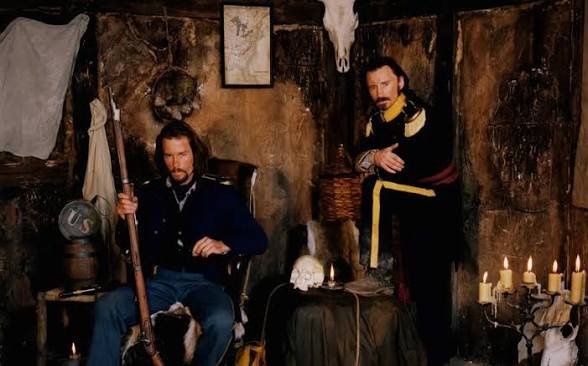
    Directed by Antonia Bird, Ravenous blends Sierra Nevada frontier survival with black-comedy cannibalism, propelled by Guy Pearce’s haunted Captain Boyd, Robert Carlyle’s unhinged Colqhoun/Ives, and Michael Nyman & Damon Albarn’s jagged banjo-and-strings score. While its wild performances and manic energy deliver strong cult entertainment, sharp tonal whiplash and a repetitive third-act brawl cap the specimen at VF-31.
     
    🚨 Key Planchet Flaws:
    1. Severe Tonal Whiplash: The script lurches abruptly between bleak 1840s manifest-destiny dread, slapstick chase gags, and camp horror-comedy, fracturing narrative consistency under the 5x lens.
    2. Third-Act Brawl Repetition: After building eerie psychological tension in the first hour, the climax devolves into extended, noisy fistfights and bear-trap slapstick that dull the ending strike.
    3. Underdeveloped Supporting Garrison: Beyond Pearce and Carlyle, the Fort Spencer soldiers function largely as thin, one-note cannon fodder with flat comedic beats.
     
    ⚖ The Final Judicial Decree
    Judged strictly on its cinematic execution rather than cult nostalgia, Ravenous earns solid Very Fine standing through Carlyle’s feral villainy and its off-kilter musical atmosphere, while its tonal swings and messy finale hold it firmly at VF-31.
    Permanently sealed in the archives as a Certified MGC VF-31 Very Fine Specimen. Case #104 is officially closed. 🏎🍖👹🩸🍲
  • ☢️ 🕳️ 🏙️ C.H.U.D. (1984) – G-4

    ☢️ 🕳️ 🏙️ C.H.U.D. (1984) – G-4
    🏛 MGC LOWER COURT OF APPEALS: CASE FILE #103
    • ASSET TITLE: C.H.U.D. (1984)
    • OFFICIAL REGISTRY GRADE: Certified MGC G-4 (Good / Heavily Circulated 1980s Grindhouse Alloy)
    • LOWER COURT JURISDICTION: Judge Tina, Chief of Cult Classics

    Tina walks up 👢👢 to the cold steel bench, tosses an empty coffee cup into the trash can 🗑, and dials her 5x magnifying lens onto this grimy 1984 New York sewer-horror specimen.

    📜 THE FORENSIC NARRATIVE BREAKDOWN
    Douglas Cheek’s 1984 cult horror film captures authentic Reagan-era New York grit and features a talented cast (including John Heard, Daniel Stern, and John Goodman), though it suffers from a slow-burning opening hour and an underutilization of its practical creature effects.
     
    1. Severe First-Hour Pacing Drag & Bureaucratic Exhaust
    Under our strict 5x numismatic magnifying lens, Douglas Cheek’s 1984 sewer-horror relic exhibits massive structural drag across its opening hour. Instead of delivering the relentless underground monster carnage promised by its iconic VHS box art, the screenplay bogs down in repetitive, talk-heavy scenes of characters wandering dimly lit Manhattan streets, rifling through city hall paperwork, and arguing over toxic-waste cover-ups. This slow-burning procedural bloat leaks narrative engine oil and stalls the thriller momentum before the creatures ever truly take center stage.
     
    2. Shadowy Lighting Corrosion & Underutilized Creature Metallurgy
    Inspecting the visual surface under high magnification reveals a frustratingly obscured strike. While the practical rubber monster suits, glowing eyes, and slimy subterranean gore carry authentic 1980s grindhouse charm, the cinematography keeps the Cannibalistic Humanoid Underground Dwellers buried in pitch-black shadows and rapid, disjointed cuts. Combined with muffled low-budget sound mixing and murky underground lighting, the production hides its best physical assets rather than letting them shine on the planchet.
     
    3. Overqualified Cast Alloy vs. Half-Baked Third-Act Execution
    What keeps C.H.U.D. safely off the PO-1 Basal State Floor and locks it squarely into the G-4 Good register is its remarkably strong cast metallurgy. John Heard, Daniel Stern, and Christopher Curry bring grounded, blue-collar conviction to thin roles, backed by an early, memorable cameo from John Goodman as a diner cop. However, even their seasoned screen presence cannot rescue a rushed, muddled third-act climax—complete with a baffling plan to flood the tunnels with gas while the heroes are still trapped inside—leaving deep structural scuffs across the final reel.

    ⚖ THE CHIEF’S FINAL DECREE
    “The VHS cover promises non-stop sewer carnage, but the 5x loupe catches a whole lot of walking around in the dark! Great cast and slimy practical suits keep it off the basement floor, but the sluggish pacing locks it right at G-4!”
    🔧💥 ☢️ Case Closed. Certified MGC G-4.
     
     
  • 🚁💥🪖BLACKHAWK DOWN (2001) – MS-61

    🏛 MGC SUPREME COURT OF CONSENSUS: CASE FILE #102
    • ASSET TITLE: 🚁 💥 🪖 BLACK HAWK DOWN (2001) – The October 1993 Battle of Mogadishu Strike
    • OFFICIAL REGISTRY GRADE: Certified MGC MS-61 (Entry-Level Brilliant Uncirculated / Historical Combat Specimen)
    • HIGH BENCH JURISDICTION: Supreme Court Vault / Modern Warfare Docket
    • PRESIDING DOCKET: MGC Judge Bob & Chief Justice MGC
     
    📜 THE MASTER NUMISMATIC AUDIT (FORENSIC LUSTER & DEFECT LOG)
    True historical combat carries unrepeatable structural weight that fiction can rarely match. Under a disciplined 5x lens, Ridley Scott’s adaptation of Mark Bowden’s non-fiction account earns its direct entry into the Mint State (MS) Vault on the strength of its tactical realism, actual 160th SOAR Black Hawk aviation, Slawomir Idziak’s bleached desert cinematography, Hans Zimmer’s haunting score, and Pietro Scalia’s Oscar-winning editing. However, four glaring historical omissions and Hollywood fictionalizations deliver a heavy smackdown that holds the planchet squarely at MS-61 rather than climbing into the upper-60s Gem tiers:
    1. The Erased UN Rescue Heroes (Major Historical Omission): In the real October 3–4, 1993 rescue, Malaysian and Pakistani United Nations forces drove tanks and armored personnel carriers into the Mogadishu kill zone—taking casualties to extract trapped American soldiers. The film virtually erases their heroism, framing the extraction almost exclusively as a solo U.S. mission.
    2. Ranger Composites & The Name-Swap: Condensing roughly 450 Task Force Ranger soldiers into a thirty-man movie cast sidelines dozens of real participants into composite characters. Most notably, Ewan McGregor’s desk-clerk-turned-rifleman “John Grimes” was fictionalized to replace an actual Ranger clerk.
    3. The Fictionalized “Mogadishu Mile” Staging: For cinematic drama, the climax depicts wounded soldiers sprinting on foot out of the combat zone all the way to Mogadishu Stadium under fire, whereas in reality the troops rallied at a much closer perimeter point before boarding UN armored vehicles.
    4. Compressed Political Context & Helmet-Lookalike Friction: Operation Gothic Serpent’s complex geopolitical buildup is reduced to brief opening title cards, while the massive, identically geared ensemble makes individual soldiers difficult to distinguish during rapid street-to-street firefights.
     
    🏆 🔍 THE FINAL DECREE & CERTIFIED JUDGMENT
    • The Final Executive Verdict: While the historical erasure of the Malaysian and Pakistani UN armored rescuers, composite Ranger consolidation, and staged stadium run permanently bar this specimen from higher Gem Mint grades, its uncompromising tactical fidelity, faithful tribute to Medal of Honor snipers Gary Gordon and Randy Shugart, and masterclass technical execution secure its slabbing at Certified MGC MS-61.
    MGC Judge Bob slams his wooden gavel down with a thunderous pop. Case Closed! 🚁💥🪖