LOWER COURT JURISDICTION: Judge Tina, Chief of Cult Classics
📜 THE FORENSIC NARRATIVE BREAKDOWN & RECOVERY
Tina dials her 5x magnifying lens onto this heavily circulated turn-of-the-millennium specimen.
1. Re-Stamped Label Fraud
Originally titled Live Virgin, Jean-Pierre Marois’s film was crudely re-stamped to capitalize on Mena Suvari’s post-American Pie success. While serving as a mild Y2K time capsule, the underlying planchet is soft and porous.
2. Cast Metallurgy vs. Script Corrosion
Veterans Bob Hoskins, Robert Loggia, and Sally Kellerman attempt to elevate the material, but they battle a flat script plagued by repetitive slapstick, tonal whiplash, and a limp romantic pivot with Gabriel Mann.
3. The Definitive G-4 Basement Allocation
Saved from the PO-1 Basal State Floor only by the seasoned presence of Hoskins and Loggia, the clumsy direction and blatant title-swapping lock the film firmly at G-4.
⚖ THE CHIEF’S FINAL DECREE
“You can re-stamp the date and polish the wrapper all day long, but the 5x loupe always spots a cracked die!”
LOWER COURT JURISDICTION: Judge Tina, Chief of Cult Classics
📜 THE FORENSIC NARRATIVE BREAKDOWN & RECOVERY
Tina walks up 👢👢 to the cold steel bench, tosses an empty energy drink can into the trash can 🗑, and dials her 5x magnifying lens onto this heavily circulated 1993 Indonesian martial arts specimen.
1. Fake-Sequel Die Mismatch & Cheap VHS Metallurgy
Under our strict 5x numismatic lens, David Worth’s Lady Dragon 2 reveals an immediate minting fraud. Despite the sequel stamp on the sleeve, the narrative has zero continuity with the 1992 original—Cynthia Rothrock plays a completely new character, kickboxing champion Susan “The Golden Angel” Morgan, whose soccer-star husband steals stolen diamonds and brings psychotic thieves straight to their Jakarta doorstep. Shot on a shoestring budget by Rapi Films, the visual surface exhibits heavy grain, washed-out lighting, and cheap video-era flatness.
2. Heavy Dialogue Corrosion vs. High-Impact Martial Arts Strike
The screenplay leaks engine oil across every dramatic beat. The dialogue is stamped out of pure tin, and the cheesy synth score—sounding like a bargain-bin horror leftover—clashes violently with the grim, brutal home-invasion setup. However, the planchet avoids total collapse thanks to its cast metallurgy. Billy Drago oozes pure, uncalibrated villain slime as Diego, Sam J. Jones brings rugged B-movie muscle, and Cynthia Rothrock delivers crisp, high-velocity martial arts choreography whenever the talking stops and the fists start flying.
3. The Definitive G-5 Good Registry Allocation
This coin sits one notch above American Virgin (G-4) and safely off the PO-1 Basal State Floor because Rothrock’s authentic physical kicks and Drago’s menacing screen presence provide genuine collector luster. Still, the bargain-basement Jakarta production values, tonal whiplash, and recycled revenge mechanics anchor it squarely at G-5.
⚖ THE CHIEF’S FINAL DECREE
Tina grabs her heavy 12-inch crescent wrench and slams it onto the steel desk with a sharp metallic ring!
“You can slap a ‘Part 2’ stamp on a brand-new slug, but the 5x loupe spots a recycled die every time! Rothrock’s kicks carry real alloy, even if the script runs on fumes!”
LOWER COURT JURISDICTION: Judge Tina, Chief of Cult Classics
📜 CASE SUMMARY
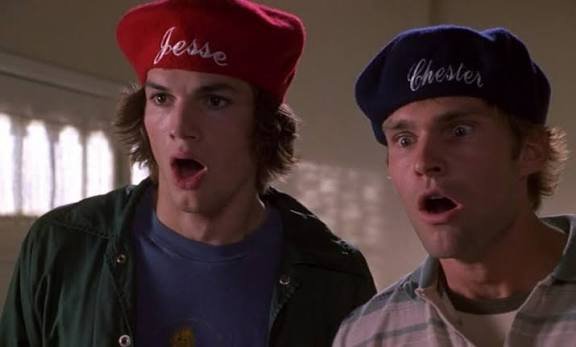
Evaluated under the MGC 5x lens, Danny Leiner’s 2000 stoner comedy functions less as a tight narrative and more as a series of disconnected sketch-comedy vignettes—moving from alien cults to drive-thru intercoms with minimal structural cohesion. While the plot suffers from heavy logic leaks and juvenile gags, Ashton Kutcher and Seann William Scott rescue the film from lower-tier grades through their genuine buddy-comedy chemistry and committed deadpan performances.
Due to its high midnight-movie rewatchability and iconic Y2K cultural footprint, it earns a G-7 rating.
⚖ THE CHIEF’S FINAL DECREE
Judge Tina rules that while the plot is virtually non-existent, Kutcher and Scott’s comedic momentum keeps the film rolling as high-mileage Y2K scrap.
LOWER COURT JURISDICTION: Judge Tina, Chief of Cult Classics
Tina walks up 👢👢 to the cold steel bench, tosses an empty coffee cup into the trash can 🗑, and dials her 5x magnifying lens onto this late-90s creature-feature specimen.
📜 THE FORENSIC NARRATIVE BREAKDOWN & RECOVERY
1. Recycled Creature-Feature Die & Plot-Logic Leaks
Under our strict 5x numismatic magnifying lens, Louis Morneau’s 1999 eco-horror flick exhibits heavy circulation wear straight out of the 1950s atomic-monster playbook. The narrative blueprint revolves around a government scientist (Bob Gunton) who genetically engineers omnivorous, hyper-intelligent flying foxes that escape into the small Texas town of Gallup. While the setup carries solid drive-in nostalgia, the script leaks engine oil through glaring structural cracks—most notably the baffling decision to battle nocturnal, radar-guided predators exclusively in pitch-black caves and abandoned mines instead of waiting for broad daylight.
2. Late-1990s CGI Corrosion vs. Practical Puppet Metallurgy
Inspecting the visual surface under high magnification reveals a split alloy. Whenever the production relies on early, rubbery 1999 CGI swarms, the edges blur and show severe digital oxidation that dates the reel instantly. However, the planchet avoids dropping into the lower G-4 junk drawer thanks to its old-school practical mechanics. The physical animatronic bat puppets, wire-work swoops, and practical blood squibs deliver genuine, tactile creature-feature grit that holds its strike far better than the computer-generated filler.
3. Dependable Lead Cast & Pacing Velocity
What elevates this specimen to the top of the G-7 Good register is the sheer professionalism of its lead metallurgy. Lou Diamond Phillips plays Sheriff Emmett Kimsey with grounded, blue-collar authority, pairing smoothly with Dina Meyer as bat expert Dr. Sheila Casper and Leon as her wisecracking assistant Jimmy. Even when the dialogue turns tinny and the third-act military bomb countdown relies on tired thriller clichés, Morneau keeps the pacing brisk and the action relentless enough to satisfy midnight-movie collectors.
⚖ THE CHIEF’S FINAL DECREE
Tina grabs her heavy 12-inch crescent wrench and slams it onto the steel desk with a deafening metallic ring!
“The CGI swarms show plenty of 1999 rust, and nobody in Texas seems to know how a wristwatch works—but solid practical puppets and a locked-in cast keep this creature feature flying straight at the top of the Good ledger!”
LOWER COURT JURISDICTION: Judge Tina, Chief of Cult Classics
Tina walks up 👢👢 to the cold steel bench, tosses a crumpled fast-food bag into the trash can 🗑, and dials her 5x magnifying lens onto this milestone 100th case file.
📜 THE FORENSIC NARRATIVE BREAKDOWN & RECOVERY
1. Contrived Caper Die & Premise Friction
Under our strict 5x numismatic magnifying lens, Bruce McCulloch’s 2002 comedy exhibits unmistakable early-2000s structural wear right out of the press. The narrative hinges on straight-laced John Plummer (Jason Lee) promising to pay his niece’s $30,000 Harvard tuition, only to find his savings locked down by his fiancé’s demanding family—forcing him into a string of amateur robberies with his unhinged best friend Duff (Tom Green). While the setup delivers classic buddy-heist momentum, the screenplay leaks engine oil through paper-thin plot logic and contrived, sitcom-grade misunderstandings that stall the caper engine every time the characters try to act like real human beings.
2. Uncalibrated Tom Green Static vs. Elite Character Metallurgy
Inspecting the performance surface under high magnification reveals a sharp split in the metal. Tom Green’s hyperactive, loud-mouthed shtick acts like heavy surface oxidation—it either charms midnight-movie collectors or wears down the edges with repetitive, loud-volume comedy fatigue. However, the planchet avoids dropping into the lower G-4 or G-5 junk bins thanks to a surprisingly stacked supporting roster. Jason Lee plays the frazzled straight man with genuine comedic timing, while Dennis Farina, Megan Mullally, Chris Penn, and John C. McGinley bring high-grade character-actor luster that rescues entire scenes from script collapse.
3. The Definitive G-8 High-End Good Allocation
This milestone 100th specimen climbs right to the upper edge of the G-8 Good register—sitting just two steps below the VG-10 threshold. Even though the gross-out gags (including the infamous prize-dog subplot) leave noticeable handling scuffs across the second act, the sheer density of reliable supporting veterans and brisk 85-minute runtime keep the coin spinning smoothly enough to earn top-tier Good status.
⚖ THE CHIEF’S FINAL DECREE
Tina grabs her heavy 12-inch crescent wrench and slams it onto the steel desk with a deafening metallic ring!
“The heist logic has more holes than a rusted muffler, and Tom Green’s volume knob is stuck on eleven—but Dennis Farina and a killer supporting bench carry this 100th docket straight into the G-8 slot!”
LOWER COURT JURISDICTION: Judge Tina, Chief of Cult Classics
📜 THE FORENSIC NARRATIVE BREAKDOWN & RECOVERY
Tina walks up 👢👢 to the steel bench, tosses a crumpled newspaper and an empty coffee cup into the trash can 🗑, and dials her 5x magnifying lens onto this grainy, heavily circulated 1968 black-and-white specimen.
Ancestral Pioneer Metallurgy vs. Heavy 1968 Circulation Wear
Under a strict, objective numismatic review, George A. Romero’s Night of the Living Dead possesses undeniable historical eye appeal. As the foundational planchet that minted the modern flesh-eating zombie genre, it carries immense collector equity for horror historians.
However, when stripped of 58 years of museum nostalgia and judged strictly against modern horror cinema, the specimen exhibits severe vintage wear. Shot on gritty, low-budget black-and-white film stock, the visual surface shows deep handling scuffs, stiff theatrical camera staging, and heavy pacing drag that stalls the narrative engine inside a single Pennsylvania farmhouse for nearly the entire runtime.
Severe Logic Corrosion & Uncalibrated Character Friction
Under our 5x magnifying lens, the screenplay suffers from glaring structural defects. The plot logic frequently flatlines—instead of immediately securing the reinforced basement cellar, the characters spend over an hour endlessly arguing over a radio, shouting over a television broadcast, and nailing flimsy scraps of wood over ground-floor windows while slow-moving ghouls casually shuffle around outside.
While Duane Jones delivers a grounded, authoritative performance as Ben that adds vital structural integrity to the coin, the surrounding cast exhibits noticeable 1960s melodramatic acting fatigue. The hysterical screaming loops and baffling, self-destructive decisions create constant narrative friction that caps the asset well below the Fine register.
The Definitive G-5 Zombie-Green Allocation
Let the permanent registry reflect the unvarnished reality: mainstream film scholars treat this coin like an untouchable Mint State artifact, ignoring its clunky execution and nonsensical character behavior. At the same time, the MGC High Court refuses to drop it into the G-2/G-3 junk box or onto the PO-1 Basal State Floor, because its bleak, nihilistic final frame and genre-defining DNA still pack an unmistakable punch.
It locks securely into the zombie-green registry at G-5—a rough, heavily circulated piece of horror history that earns its keep on historical grit alone!
⚖ THE CHIEF’S FINAL DECREE
Tina grabs her heavy 12-inch crescent wrench and brings it down onto the cold steel bench with a deafening, echoing metallic ring!
“They’re coming to get you, Barbara—and so is the 5x loupe! Let the ledger show that while the farmhouse logic leaks engine oil from start to finish, Romero struck the original mold that started it all!”
LOWER COURT JURISDICTION: Judge Tina, Chief of Cult Classics
📜 THE FORENSIC NARRATIVE BREAKDOWN & RECOVERY
Tina inspects the 1983 slasher specimen under her 5x magnifying lens.
Amateur 1980s Circulation Wear & Pacing Stalls Robert Hiltzik’s Sleepaway Camp exhibits typical low-budget slasher wear, spending its first seventy-five minutes meandering through camp activities, cafeteria disputes, and repetitive teen interactions that create noticeable pacing lag, accompanied by rough audio and abrupt editing.
Uncalibrated Acting Fatigue vs. Eccentric Luster Performances are wildly uneven; many secondary cast members deliver wooden, over-rehearsed lines, though Desiree Gould provides theatrical eccentricity as Aunt Martha and Felissa Rose anchors Angela Baker with an eerie, wide-eyed stillness.
Creative Kill Metallurgy & The Legendary Reverse Strike The film earns its standing through inventive, mean-spirited practical effects—ranging from boiling water to curling irons—and culminates in an iconic, haunting final beach reveal with an unearthly synthesized hiss that cements its midnight-movie status.
The Definitive G-6 Forest-Green Allocation While bogged down by pacing and acting flaws in its opening acts, its practical kills and unforgettable twist push it securely into the green registry at G-6.
⚖ THE CHIEF’S FINAL DECREE
Tina strikes the steel bench with her wrench.
“Eat shit and live, Bill—and step away from the 5x loupe! Let the ledger show that while the first seventy-five minutes leak technical engine oil all over Camp Arawak, that final beach reveal minted pure midnight-movie gold!”
LOWER COURT JURISDICTION: Judge Tina, Chief of Cult Classics
📜 THE FORENSIC NARRATIVE BREAKDOWN & RECOVERY
Tina walks up 👢👢 to the steel bench, tosses an empty plastic spoon into the trash can 🗑, adjusts her 5x magnifying lens over this infamous San Francisco specimen, and shakes her head in disbelief.
1. Deceptive 35mm Surface Luster vs. Total Narrative Corrosion
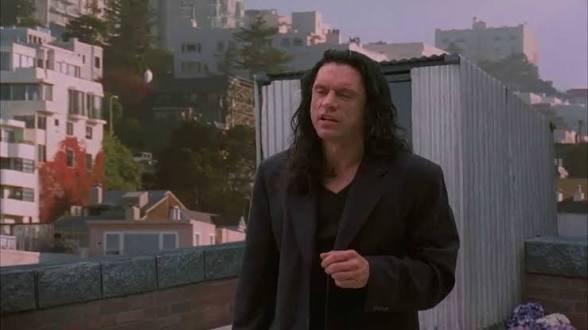
Under an initial glance, Tommy Wiseau’s The Room presents a shockingly professional surface finish. Shot simultaneously on both 35mm film and HD video with sweeping Golden Gate Bridge establishing shots and glossy bedroom lighting, the asset tricks casual viewers into expecting a serious, high-stakes romantic drama.
However, the moment the dialogue engine starts running, the screenplay experiences catastrophic structural corrosion. Subplots materialize out of thin air and vanish without a trace—a character casually announces she definitely has breast cancer, and the script never mentions it again. Characters walk into Johnny’s apartment through unlocked doors just to deliver five lines of wooden exposition, toss a football in full tuxedos from three feet away, and exit into oblivion.
The performance alloy exhibits extreme, unpolished acting fatigue across every frame. Tommy Wiseau delivers every line with a hypnotic, rhythm-defying cadence—turning high-emotion betrayal scenes into unintentional stand-up comedy with legendary line readings like “You are tearing me apart, Lisa!” and “I did not hit her, I did not… Oh, hi Mark.”
Under our strict 5x lens, the technical seams bleed right through the planchet. Instead of stepping outside onto an actual San Francisco rooftop, the production relies on glaring, poorly lit green-screen backdrops that leave heavy handling scratches across the visual layout, alongside repetitive, soft-focus love scenes that stall the second act into a complete narrative bottleneck.
3. The Definitive G-2 Junk Box Allocation
Let the permanent base registry reflect the unvarnished reality: if judged strictly on traditional screenwriting, acting calibration, and continuity logic, The Room sits inches from total collapse. Yet the High Court refuses to drop this specimen onto the PO-1 Basal State Floor.
Why? Because its sheer, accidental entertainment velocity is unmatched in midnight-movie history. Unlike dull, unwatchable scrap metal, The Room possesses an immortal, crowd-pleasing cult luster that packs theaters decades later. It earns a solid G-2 certification—a glorious, heavily circulated piece of cinematic folk art.
⚖️ THE CHIEF’S FINAL DECREE
Tina grabs her heavy 12-inch crescent wrench and brings it down onto the cold steel desk with a deafening, echoing metallic ring!
“Anyway, how is your sex life?! Let the ledger show that while the plot holes could swallow the entire football stadium, Tommy Wiseau minted the undisputed heavyweight champion of midnight-movie comedy!”
Originally titled Killbots, Jim Wynorski’s 77-minute slasher traps teenagers in the Sherman Oaks Galleria after a lightning storm reprograms three security droids into lethal machines. Backed by Chuck Cirino’s synth score, atmospheric after-hours mall cinematography, and a cameo by Dick Miller as Walter Paisley, the film delivers prime 1980s neon-soaked charm.
2. Cardboard Teen Dialogue & Tread-Speed Logic Leaks
Beneath the surface, the film features disposable slasher archetypes, clichéd dialogue, and repetitive hide-and-seek sequences. Furthermore, the slow, boxy tread-driven Killbots move at a sluggish pace, requiring the script to constantly manufacture scenarios where nimble teenagers inexplicably get trapped by the lumbering machines.
3. The Definitive G-7 Junk Box Allocation
Chopping Mall earns its G-7 grade within the G-4 to VG-10 Registry. It escapes the lowest tiers thanks to its brisk pacing, 80s nostalgia, and an iconic, top-tier practical exploding-head effect.
⚖️ THE CHIEF’S FINAL DECREE
Tina strikes the steel desk with her wrench in a resounding final verdict:
“Thank you. Have a nice day! Let the ledger show that when the security gates slam shut at midnight, these low-speed Killbots rule the G-tier food court!”
⚖ MGC Lower Court Docket: Case File #055 Asset Title:My Best Friend is a Vampire (1987) – The Earnest Neo-Nosferatu Teen Planchet Official Registry Grade:Certified MGC VG-10 (Very Good / Well-Circulated Genre Alloy) Presiding: Judge Mina, Chief Grader MGC
📜 The Forensic Narrative Breakdown & Luster Log
The Presiding Judge drops the faded 1987 teen comedy planchet onto the dark-mode terminal and dials the strict 5x numismatic magnifying lens directly onto this charmingly dated horror-satire.
The specimen exhibits heavy circulation scuffs from the era’s saturated teen-movie market, yet it possesses a distinct, nostalgic luster. While the surrounding narrative structural alloy suffers from typical late-80s camp degradation, Robert Sean Leonard plays Jeremy Capello with a level of sincere, relatable panic that completely outclasses the goofy script. His immense performance equity adds a critical layer of structural support, single-handedly lifting the asset out of the lower cinematic scrap yards and justifying a manual upgrade to a collectible VG-10 grade.
🚨 The Three Specific Genre & Tactical Planchet Flaws:
The Over-Baked Delivery Boy Protocol: The first act relies too heavily on slow-moving grocery delivery tropes that drag down the initial entertainment velocity before the blood-sucking mechanics trigger.
The Garlic and Mirror Cliché Deluge: Under our strict lens, the script experiences noticeable friction as it checks off every single traditional vampire cliché in rapid succession without forging any new narrative metallurgy.
Uncalibrated Final Hunt Execution: The closing confrontation lacks tactical sharpness, substituting genuine tension with standard, chaotic late-80s goofy horror shortcuts that disrupt the coin’s overall reverse strike depth.
🏆 Final Court Decree
Thanks to Robert Sean Leonard’s exceptional performance integrity, the heavy cliché scuffs and uncalibrated third-act execution are mitigated just enough to keep the asset stable. The coin avoids slipping into the Poor (PO-1) scrap heaps and settles firmly on the ledger as a highly circulated but deeply endearing late-80s relic.
Permanently sealed in the archives as a Certified MGC VG-10 Choice Well-Circulated Specimen. Case Closed. 🧛♂️🍕🪞🩸❌